
How Nelly Korda Won the 2026 Chevron Championship Without Fixing Her Putting
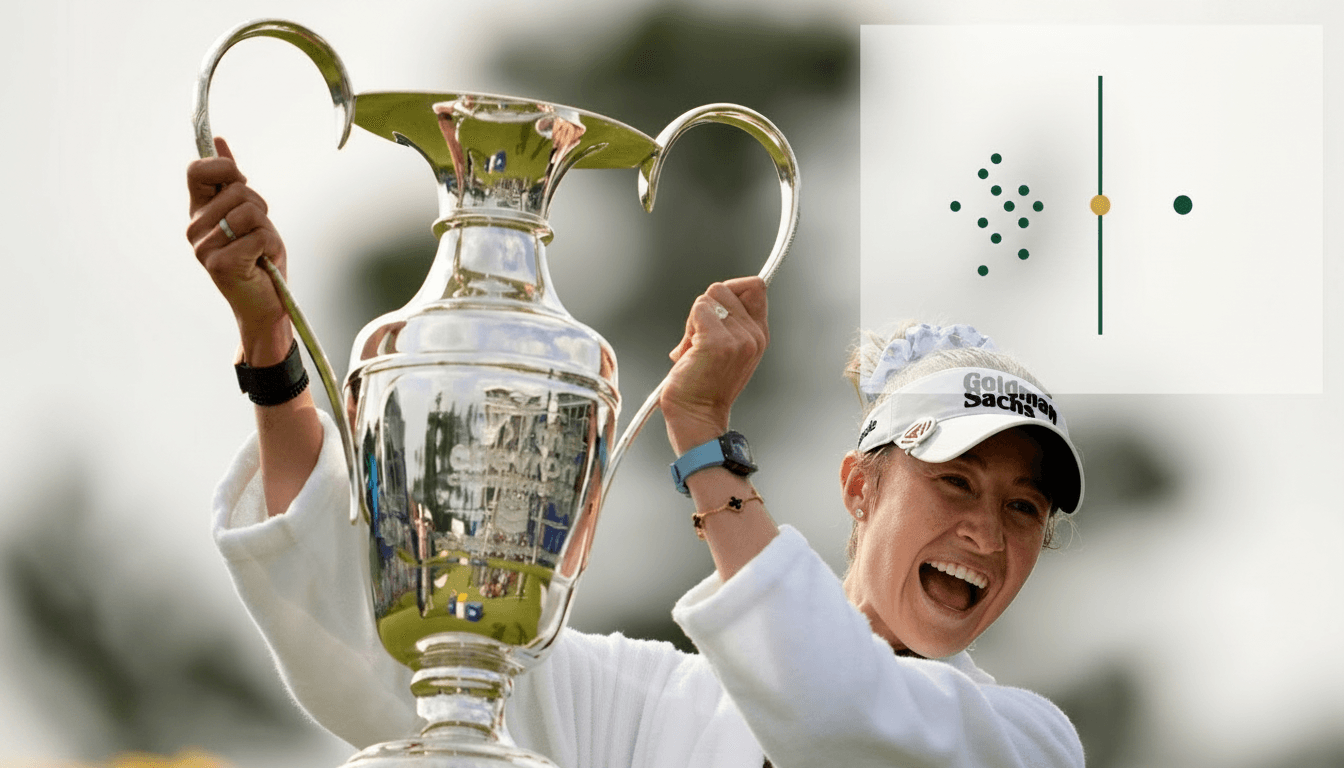
Nelly Korda didn't fix her putting stroke overnight before winning the 2026 Chevron Championship — she didn't try to. After missing several short putts in Round 3, she acknowledged the misses, accepted them, and moved on. She told her caddie to keep doubt out of Sunday's strategy entirely, protecting her mental state instead of rehearsing corrections. She carried a five-shot lead wire-to-wire at Memorial Park, and the full picture of how she pulled it off goes deeper than you'd expect.
What Korda did on Sunday at Memorial Park
At Memorial Park in Houston, Nelly Korda stepped onto the first tee Sunday with a five-shot lead and walked off eighteen holes later as the wire-to-wire 2026 Chevron Championship winner — but the real story started a day earlier, when she missed several short putts in the third round that would've rattled most players.
Instead of attempting a technical fix overnight, she acknowledged the misses and moved on. This kind of response reflects a mental resilience framework that separates elite competitors from those who unravel under pressure.
Sunday brought a bogey on 12, then an attacking birdie on 13 where she rejected her caddie's conservative line and hit it to two feet. She laid up on 16 to protect the lead.
If you're wondering how to build confidence in golf after a bad run, Korda's Sunday performance — built on acceptance rather than correction — is the clearest possible answer.
Why she told her caddie to keep doubt out of the strategy
What Korda told her caddie before Sunday's final round wasn't a technical checklist — it was a boundary.
After missing short putts in round three, her default could have been rehearsing her stroke on every tee box.
Instead, she chose acceptance over adjustment.
She separated her identity from the misses and explicitly instructed her caddie to keep technical doubt out of their final-round strategy entirely. At Memorial Park, that boundary held.
Automated movements break down when you consciously monitor them under pressure. Korda refused to open that door, and her caddie was there to enforce it.
Korda joins McIlroy: the 2026 pattern of refusing to interfere
Two weeks earlier, Rory McIlroy did something structurally similar at the Masters — he managed expectation pressure by refusing to engage with it rather than trying to mentally outwork it.
The 2026 pattern emerging across both majors isn't players doing more under pressure — it's players doing less of the wrong thing.
Nelly Korda's Chevron Championship 2026 win and her caddie strategy both reflect this same discipline: identify what's unhelpful, cut it out, and execute what remains.
You're watching a shift. The best players aren't outworking pressure anymore. They're simply refusing to let it set the agenda.
What this means for your next round under pressure
The pattern Korda and McIlroy both demonstrated isn't reserved for major winners — you can apply the same discipline this weekend.
After her LPGA major win at Memorial Park in Houston, three behaviours separated her from collapse.
First, name bad shots plainly and stop there — no rehearsed corrections on the next tee.
Second, decide before your round which doubts your internal voice can raise and which are off-limits.
Third, commit fully: attack when conviction's total, protect when the lead demands it.
Hesitation — half-attacking, half-protecting — is the real error.
If you want the deeper framework, the confidence-building work starts earlier than Sunday.
Try it free
Ready to organise your mental game?
Capture your swing thoughts, set your focus, and play with clarity.


Related reading
Jon Rahm's Strategy for External Noise at the 2026 PGA Championship
Jon Rahm shelved LIV funding news until after his round at the 2026 PGA Championship. The information discipline that protects a Tour pro's competitive state.
Rory McIlroy's Final Four Holes at Aronimink in the 2026 PGA Championship
Rory McIlroy ended his opening round at Aronimink with four straight bogeys after trying to manually fix his driver. What happens when conscious control replaces trained instinct?
Matt Fitzpatrick Beats Scottie Scheffler in a Playoff by Treating Pressure Like an Away Win
Matt Fitzpatrick beat Scottie Scheffler in a playoff at the RBC Heritage by reframing crowd hostility as fuel and resetting to zero for the extra hole. What his football analogy, his four-iron commitment, and his honest self-assessment reveal about managing pressure without trying to block it out.