
What the 2026 Masters Taught Us About Pressure, Belief, and the Mental Game of Golf
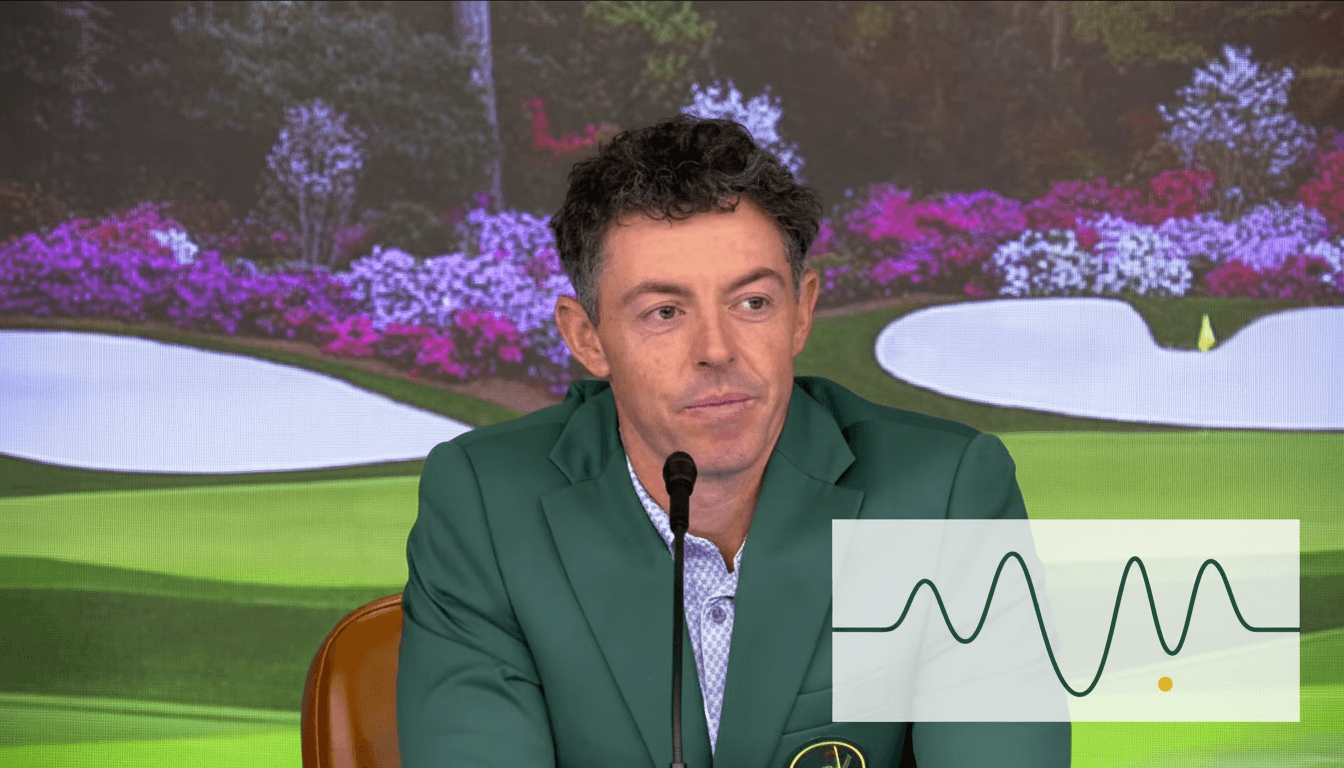
The 2026 Masters proved that your mental system matters more than your ball-striking. Rory McIlroy self-graded his driving a B-minus, yet he won by finishing at -12. Justin Rose's indecision broke him at Amen Corner. Cameron Young couldn't sustain belief while leading on Sunday. The difference wasn't talent — it was how each player managed pressure, narrowed focus, and treated failure as information. Stick around, and you'll discover exactly how they did it.
A Week-Long Case Study in How Mental Systems Perform Under Pressure
The 2026 Masters wasn't decided by ball-striking. McIlroy graded his own driving a B-minus and spent the week hitting trees. What decided it was whose mental operating system golf could rely on when pressure peaked. That's the real case study this tournament delivered.
McIlroy's system adapted across four days. Scheffler's ran clean from a position of zero expectation. Rose's broke at Amen Corner twice. The final leaderboard — McIlroy -12, Scheffler -11, Rose/Young/Hatton/Henley at -10 — isn't a scoring summary.
It's a map of golf mental resilience under escalating pressure. Every position tells you something about the system behind it. Under that kind of pressure, the golfers who held their ground were those operating with cognitive load reduction, narrowing their focus to a single executable thought rather than managing a cascade of competing instructions.
The Four Versions of Rory McIlroy — How His Mental System Evolved Across 72 Holes
When McIlroy's "keep swinging" mantra stopped working on Saturday, he didn't spiral — he went to the range that evening, diagnosed the problem himself, and fixed his swing path without a coach or a launch monitor in sight.
That's worth pausing on, because most golfers, when their game deserts them mid-tournament, reach outward for answers rather than inward.
What Saturday night revealed isn't just self-reliance — it's a process-oriented mindset that treats failure as diagnostic information rather than confirmation of collapse. Part of what made his self-correction so effective was his ability to narrow his attention to a single swing thought, reducing cognitive load in golf rather than overwhelming himself with mechanical fixes.
What McIlroy's Saturday Night Range Session Reveals About Process Over Panic
After his six-shot lead dissolved on Saturday, McIlroy didn't spiral — he went to the range and got to work. That's his mental game in action: diagnose, don't catastrophise.
No entourage, no launch monitor — just Rory and his caddie identifying a specific problem.
His golf pressure management came down to three steps:
- Identify the fault — path too far inside, causing an uncontrollable draw
- Apply the fix — cut shots, opening his lower body through impact
- Trust the process Sunday — producing the pivotal 12th tee shot when it mattered most
You can't fake that discipline. Sports psychologists estimate that 90 per cent of golf is played from the neck up, which explains why McIlroy's methodical range session — focused on process rather than scoreboard — was ultimately more decisive than any physical adjustment he made.
Justin Rose, Cameron Young, and the Two Ways Confidence Breaks
Two players stood between Rory McIlroy and history on Sunday, and they both fell — but for entirely different reasons.
Rose's week told a story of commitment breaking at the worst moment — indecision at 11 and 12, then overcompensation at 13.
He didn't need a different strategy; he needed a cleaner decision.
Young's story was different.
Seven runner-ups built real confidence, and his Saturday 65 proved it.
But Sunday at Augusta demands something beyond resilience — it requires sustaining belief while leading.
Young couldn't do that yet.
Two fixable problems.
Two completely different solutions.
Both players would benefit from active thought selection — the deliberate practice of choosing committed, process-focused thoughts over reactive ones when pressure peaks.
What the Pundits, the Fans, and a Sports Therapist All Noticed — It Was Always About the Mental Game
By Sunday evening, the verdict from every corner of the commentary world had converged on the same conclusion: Rory McIlroy hadn't won the 2026 Masters with his driver or his irons — he'd won it with his mind.
The lessons weren't subtle. Every observer confirmed it:
- Butch Harmon: McIlroy fights; he doesn't dominate
- Dame Laura Davies: Won without his best stuff
- A sports therapist: Identified CBT, ACT, and mindfulness in real time
When fans said "perfect imperfect golf," they'd identified the core truth of golf mental performance — managing your mind beats managing your swing. What sports psychologists have long understood is that translating academic research into practice is the critical bridge between knowing these mental tools and actually deploying them under tournament pressure.
What the 2026 Masters Teaches Every Golfer About Building a Mental System
The 2026 Masters just gave every golfer a free masterclass — and you don't need a tour card to apply it.
McIlroy's week proves five things: flow isn't a system; a numerical target beats a failing mantra under pressure; diagnosing a problem stops the spiral; mental tools you absorb early save you later; and committed mistakes beat indecisive ones every time. That's your review of the week in five rules.
Build your active thought golf framework now — one clear instruction that governs your next shot when everything else is noise. Research consistently shows that shifting to external attention cues — focusing on a target rather than your own mechanics — produces more reliable performance when pressure peaks. You'll need it the moment your round turns against you.
Conclusion
You watched the 2026 Masters deliver something rarer than a leaderboard. You saw the human mind exposed under maximum pressure — building, breaking, rebuilding in real time. Rory held. Lowry collapsed. Scheffler trusted his process when nothing was on the line, which is exactly why everything worked when it was. That's not luck. That's mental architecture. And now you know what yours needs to look like.
Try it free
Ready to organise your mental game?
Capture your swing thoughts, set your focus, and play with clarity.


Related reading
What Rory McIlroy, Patrick Reed and Tommy Fleetwood Revealed About Their Mental Game After Round 2 at the 2026 Masters
Three players, three mental systems, one Masters leaderboard. What McIlroy's mantra, Reed's conviction architecture and Fleetwood's discipline protocol reveal about building a mental operating system that works under pressure.
Aaron Rai's Final Round at the 2026 PGA Championship
Aaron Rai won the 2026 PGA Championship with two layers of mental architecture working together: Sunday leaderboard discipline and a structural identity built over decades.
Cognitive Load in Golf: How Amateurs Can Think Less and Play Better
Carrying three swing thoughts to the ball is one of the most common amateur mistakes. This is how to filter inputs, protect working memory, and swing with one clear thought.