
Golf Performance Anxiety: The Physiology Behind the Problem
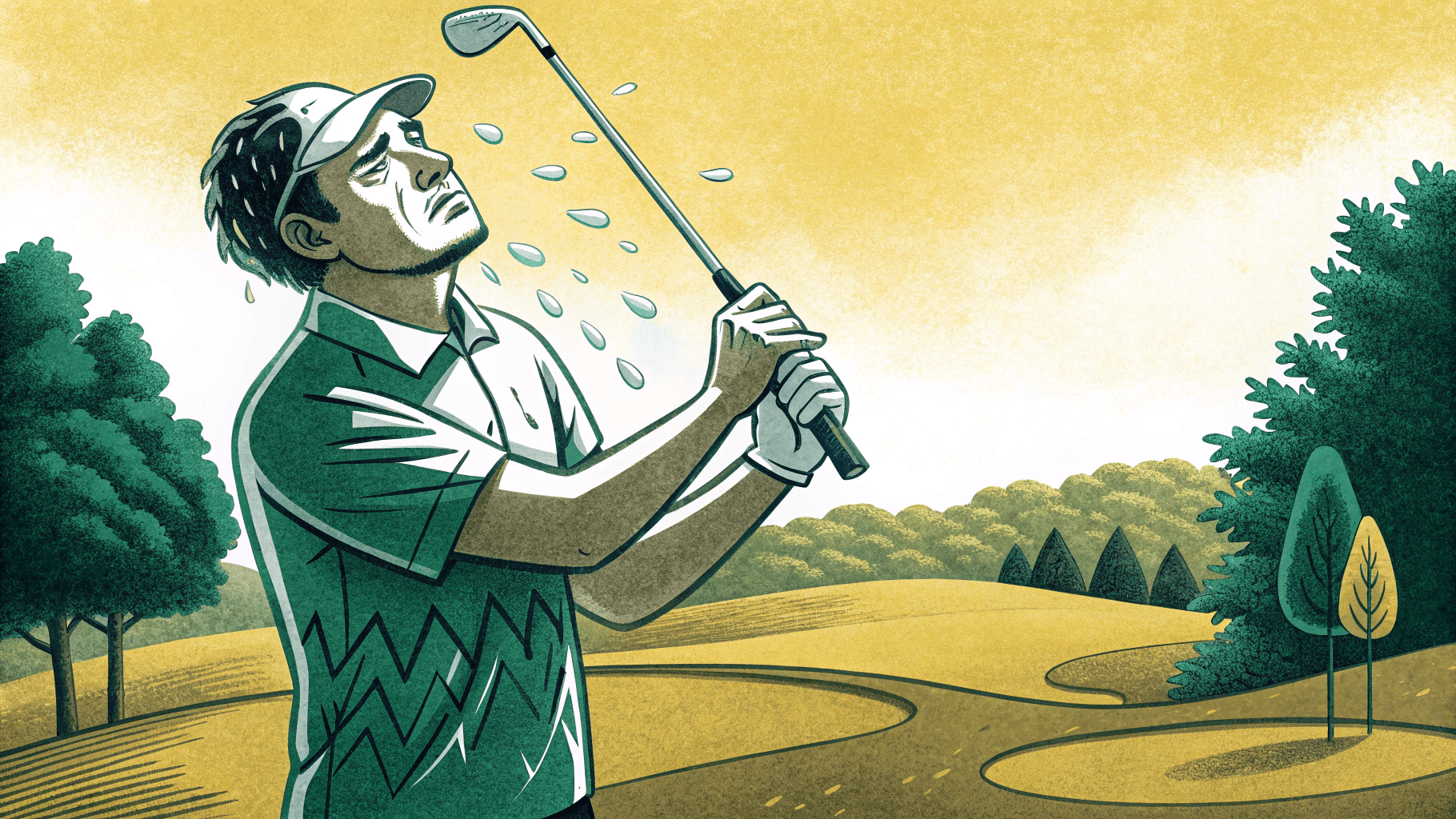
When you step onto the first tee under pressure, your brain misreads competitive stress as physical danger and triggers a fight-or-flight response. Your heart rate climbs, muscles tighten, breathing quickens, and cortisol floods your system. These automatic physiological shifts disrupt the fine motor control and mental clarity that golf demands. Your nervous system can't distinguish a high-stakes putt from a genuine threat — but understanding exactly what's happening inside your body changes everything.
What Is Golf Performance Anxiety and Why Does It Feel Physical?
Golf performance anxiety isn't just in your head—it lives in your body, too. When you step onto the course under pressure, your brain misreads competitive stress as danger, triggering the fight-or-flight response. Your heart rate climbs, your breathing quickens, your muscles tighten, and your focus fractures.
This is performance anxiety golf players experience at every skill level. It's not weakness—it's biology working against you at the wrong moment.
Anxiety and golf create a particularly difficult combination because the sport demands precision, fine motor control, and mental clarity.
When cortisol spikes and muscle tension increases, your swing mechanics break down, your putting stroke loses its fluidity, and your concentration shifts away from execution.
You'll notice pounding in your chest, racing thoughts, and an inability to stay present.
A structured golf warm-up routine that addresses both physical and mental readiness can help calm these physiological responses before they take hold on the course.
Understanding that these sensations are physiological responses—not signs of failure—is your first step toward managing them effectively.
The Fight-or-Flight Response Driving Golf Anxiety
When you step onto the course under pressure, your brain misreads competitive stress as physical danger and triggers your fight-or-flight response, spiking your heart rate and breathing.
That heightened heart rate pulls your attention away from your swing mechanics and onto the threat your brain thinks you're facing.
Your muscles tighten in response, and that tension directly disrupts the smooth, coordinated movement a consistent golf swing demands.
This mental interference often floods your mind with competing driver swing thoughts, undermining your ability to commit to a single, fluid motion.
Stress Triggers Physical Response
Whether you're stepping onto the first tee or lining up a key putt, your body can't always distinguish between a competitive golf round and a genuine physical threat.
When stress hits, your fight-or-flight response activates immediately. Your heart rate climbs, your breathing quickens, your muscles tighten, and you start sweating more than the situation seems to warrant.
These physical changes exist to prepare you for danger, but on the golf course, they work against you.
Tight muscles disrupt your swing mechanics. A racing heart makes it harder to settle into a smooth putting stroke.
Your body's trying to protect you, but it's responding to perceived pressure as though your life's at stake — and that misfire costs you strokes.
Heart Rate Affects Focus
The fight-or-flight response doesn't just tighten your muscles — it hijacks your focus. When your heart rate spikes, your brain shifts attention away from technique and toward perceived threats. You're no longer thinking about your swing path; you're scanning for danger that isn't there.
This attentional shift is automatic. Heightened cortisol and increased heart rate — documented in elite golfers during competition — pull your mind toward self-monitoring rather than execution.
You start consciously controlling movements that should feel automatic, and that's exactly when putting mechanics breaks down.
The result is a feedback loop: anxiety raises your heart rate, your focus narrows incorrectly, your performance suffers, and your anxiety climbs higher.
Understanding this cycle is the first step toward interrupting it.
Muscle Tension Disrupts Swing
Muscle tension is another casualty of fight-or-flight activation. When anxiety spikes, your muscles tighten involuntarily, disrupting the fluid mechanics your swing depends on.
That tension doesn't stay isolated — it spreads through your shoulders, arms, and hands, compromising the coordination you've spent years refining.
Here's the problem: golf demands precise, repeatable movement patterns executed with minimal conscious interference. Anxiety forces your body into a protective state that prioritises survival over subtlety.
Your swing becomes rigid, your timing breaks down, and your judgment suffers. Shots you'd execute effortlessly in practice suddenly feel foreign under competitive pressure.
Research confirms that heightened anxiety produces less efficient movement patterns and measurable performance decline. The tighter you grip under pressure — mentally and physically — the harder performance becomes.
How Cortisol Hijacks Your Competitive Round
When you step onto the first tee in a tournament, your body often betrays you before you've even swung a club. Cortisol, your primary stress hormone, surges during competition in ways it simply doesn't during practice rounds.
Research on elite golfers confirms measurably heightened cortisol and heart rate when the competitive stakes are high.
Here's what that cortisol spike actually triggers in your body:
- Heart rate climbs, disrupting your rhythm and tempo
- Breathing quickens, reducing your ability to stay calm and centred
- Muscle tension increases, tightening your grip and restricting your swing
- Sweat production rises, affecting your club control
- Mental focus narrows, pulling attention away from execution
Your body interprets competitive pressure as danger, activating a fight-or-flight response designed for survival, not a smooth backswing. Even PGA Tour professionals experience this response, which is why many rely on pre-shot routine cues to redirect attention away from the body's stress signals and back toward execution.
Recognising that cortisol is driving these changes helps you understand why tournament golf feels so different from casual play.
Why Golf Anxiety Destroys Fine Motor Control
Golf demands some of the most precise fine motor control in all of sport, and anxiety systematically dismantles it.
When you experience performance anxiety, your fight-or-flight response floods your body with physiological changes that directly oppose what precise movement requires.
Your muscles tighten involuntarily.
Your heart rate climbs.
Your breathing quickens.
Each of these responses served your ancestors well against physical threats, but they're devastating to a putting stroke or iron swing that demands fluid, coordinated movement.
Anxiety shifts your attention inward, making you consciously monitor mechanics you'd normally execute automatically.
That conscious interference breaks down the automaticity your nervous system spent years building.
Research confirms this: cognitive anxiety directly causes poorer putting performance, particularly at pressure distances.
The result is muscular tension that corrupts your swing path, judgment errors under pressure, and the dreaded yips—a physical manifestation of anxiety hijacking your motor system entirely.
Structured practice routines designed around range sessions and drills can help rebuild the automatic movement patterns that anxiety erodes, making your mechanics more resistant to pressure situations.
Why Golf Anxiety Overloads Your Brain Under Pressure
Anxiety doesn't just wreck your body—it overloads your brain at the worst possible moment. Under pressure, your mind splits its attention between executing the shot and managing fear, leaving fewer cognitive resources for actual performance. The result? Poor decisions, broken focus, and mechanical thinking that dismantle your natural swing.
Here's what's happening mentally when anxiety spikes:
- Racing thoughts crowd out your ability to focus on the target
- Fear of failure pulls attention toward consequences instead of execution
- Cognitive anxiety forces conscious control over movements that should feel automatic
- Judgment errors increase as mental bandwidth shrinks
- Self-confidence drops, creating a feedback loop that deepens the problem
This mental overload explains why a putt you've made a thousand times suddenly feels impossible during a tournament. Your brain isn't broken—it's misinterpreting competitive stress as genuine danger, triggering responses that actively work against you. One of the most effective ways to counteract this overload is to develop a structured pre-shot routine that provides your brain with a reliable mental cue to shift attention away from fear and back toward execution.
How Putting Falls Apart When Anxiety Peaks
Putting is where anxiety does its most visible damage. When pressure rises, your muscles tighten, your focus fragments, and the fluid mechanics you've rehearsed thousands of times begin to break down. Research confirms that high anxiety measurably worsens putting performance, particularly at short distances like 1.25 meters, where misses feel inexcusable.
Here's what's happening beneath the surface: anxiety pushes you into conscious control of movements that should run automatically. You start monitoring your grip, your backswing, your follow-through. That internal surveillance disrupts the very automaticity that makes good putting possible. The result is choking.
Perfectionism amplifies this cycle. If you react negatively to imperfection, your anxiety spikes harder, and your putting suffers more. Studies show that negative reactions to imperfection indirectly worsen putting performance through heightened anxiety. You're not just missing putts—your mental response to those misses is guaranteeing more of them.
The Yips: Anxiety's Most Visible Symptom
If you've ever watched your putter twitch, jerk, or freeze at the moment of impact, you've likely experienced the yips—an involuntary muscular spasm that anxiety directly triggers by disrupting the automatic motor patterns you rely on.
Research confirms that high negative reactions to imperfection (NRI) and heightened anxiety strongly predict yips reporting, meaning your perfectionism and competitive stress can physically hijack your stroke.
You can fight back by recognising the anxiety signals early and applying pre-shot routines, breathing techniques, and mindset shifts that restore the automatic, tension-free movement you're putting in.
Defining the Yips
Among the most dramatic manifestations of golf performance anxiety is a phenomenon known as the yips—involuntary muscle spasms or jerks that can completely derail a putt.
If you've experienced the yips, you'll recognise these tell-tale signs:
- Suddenly, uncontrollable wrist jerks mid-stroke
- Muscle tension that freezes your natural putting motion
- Loss of smooth stroke automaticity under pressure
- Racing thoughts disrupting your mechanical focus
- Anxiety-driven physical symptoms mimicking fight-or-flight responses
Research confirms that high negative reactions to imperfection (NRI) and heightened anxiety directly predict yips reporting and putting errors.
Essentially, your brain misinterprets competitive pressure as danger, triggering physiological responses that sabotage fine motor control.
Understanding this connection helps you recognise the yips aren't a mysterious curse—they're anxiety made visible.
Anxiety Triggers Yips
How does anxiety actually pull the trigger on the yips? When you experience high anxiety, your body activates its fight-or-flight response, flooding your muscles with tension and disrupting the smooth, automatic movements required. Instead of trusting your trained mechanics, anxiety forces you into conscious control of your stroke — and that's where everything breaks down.
Research confirms that high negative reactions to imperfection (NRI) predict anxiety, which directly predicts yips symptoms. The physical changes anxiety produces — muscle tension, increased heart rate, impaired coordination — mirror the involuntary jerks and twitches golfers describe as the yips. You're not imagining it. Your nervous system is genuinely hijacking your motor function, turning a routine four-foot putt into something that feels uncontrollable.
Overcoming Yips Symptoms
Once you understand what's driving the yips, you can start fighting back. Effective strategies target both the mental and physical roots of anxiety-driven movement disruption:
- Reframe perfectionism: Reduce negative reactions to imperfection by accepting mistakes as part of the game
- Rebuild automaticity: Practice pre-shot routines until they're unconscious, reducing conscious mechanical interference
- Control arousal: Use deep breathing to lower heart rate, muscular tension, and cortisol levels
- Reinterpret nerves: Recognise competitive stress as anticipation rather than danger
- Reduce cognitive anxiety: Shift focus toward process cues instead of outcome-based thinking
These approaches directly counter the anxiety cycle that triggers yips symptoms.
You won't eliminate nerves entirely, but you can prevent them from hijacking your putting mechanics when it matters most.
How Perfectionism Feeds the Golf Anxiety Cycle
Perfectionism quietly drives one of golf's most punishing mental cycles. When you hold yourself to impossibly high standards, every missed putt or errant shot becomes a threat rather than a setback.
That negative reaction to imperfection (NRI) triggers anxiety, which then directly disrupts your putting performance.
Research confirms this chain reaction. High NRI predicts raised anxiety, and that anxiety predicts worse putting outcomes.
The indirect effect is measurable and consistent. You're not imagining the mental weight — it's physically changing how your muscles move.
Here's what makes it particularly cruel: anxiety tightens your muscles, interrupts your automatic swing mechanics, and pulls your attention inward.
You start consciously monitoring movements that should flow naturally, which causes choking.
The harder you try to perform perfectly, the more you undermine the fluid execution that good golf actually requires.
Recognising this cycle is your first step toward breaking it.
Why Tour Players Still Struggle With Performance Anxiety
You might assume that elite golfers have conquered performance anxiety, but tour players crack under pressure just like amateurs do.
When competition stress hits, their bodies release elevated cortisol levels, their heart rates climb, and their finely tuned motor skills begin to break down.
Nerves don't discriminate by skill level—they disrupt the automatic movement patterns that tour players spend years perfecting.
Elite Golfers Still Crack
Even elite tour players—whose careers depend on consistent execution under pressure—aren't immune to performance anxiety.
Research confirms that competition triggers measurable physiological changes even in highly skilled golfers:
- Raised cortisol levels during tournament rounds compared to practice
- Increased heart rate disrupting timing and rhythm
- Higher somatic and cognitive anxiety during competition
- Reduced self-confidence in tournament settings versus practice
- Muscle tension alters swing mechanics and fine motor control
These aren't mental weaknesses—they're automatic biological responses.
Your nervous system can't distinguish between genuine danger and a high-stakes putt.
That fight-or-flight response fires regardless of your skill level or experience.
Understanding that even tour professionals experience these physiological shifts helps normalise your own anxiety and frames it as something you can manage rather than eliminate.
Nerves Disrupt Motor Skills
The moment nerves hit, your body hijacks your swing. Your fight-or-flight response activates, raising your heart rate, tightening your muscles, and disrupting the smooth motor patterns you've practised thousands of times. These physical changes aren't random—they directly interfere with fine motor control.
Putting becomes especially vulnerable. Research shows that as anxiety climbs, you shift from automatic, fluid movement to consciously controlling your mechanics. That conscious overthinking breaks down the automaticity your stroke depends on, causing the very errors you're trying to avoid.
Muscle tension compounds the problem, creating judgment errors and swing disruptions that compound under pressure. Your body essentially works against you at the worst possible moment—turning a physical skill you've mastered into something that suddenly feels unfamiliar and uncontrollable.
Cortisol Spikes During Competition
Among elite golfers, cortisol and heart rate spike measurably higher during competition than in practice—even for Tour professionals who've spent decades managing pressure. Your body doesn't distinguish between a threat and a tournament round—it reacts the same way.
These physiological shifts create real performance obstacles:
- Raised cortisol disrupts focus and decision-making under pressure
- Heart rate increases, tighten muscles, and reduce swing efficiency
- Breathing rate rises, destabilising your rhythm and timing
- Heightened sweat production affects grip pressure and club control
- Somatic anxiety intensifies, compounding cognitive anxiety simultaneously
These aren't signs of weakness—they're your fight-or-flight response activating automatically. Understanding that even the best players experience these measurable changes helps you contextualise your own competitive struggles rather than misinterpreting them as personal failure.
When Golf Nerves Actually Improve Your Game
While anxiety often gets a bad reputation in golf, it's not always your enemy on the course. Moderate arousal can sharpen your focus and improve your performance when used correctly.
Think of your nervous system as a performance dial. Too little arousal leaves you flat and disengaged. Too much sends you into the fight-or-flight spiral that tightens your muscles and derails your swing. But right in the middle, you'll find a sweet spot where your heart rate and cortisol levels prime your body for peak execution.
That pre-round flutter you feel? It's your body preparing you to compete. The key is reinterpreting those physical signals as anticipation rather than danger.
Research confirms that stress becomes harmful primarily when you misread it as a threat. When you reframe nerves as readiness, you transform a potential liability into a genuine competitive advantage.
References
- https://digitalcommons.georgefox.edu/cgi/viewcontent.cgi?article=1342&context=psyd
- https://www.golfsciencejournal.org/article/33644-the-relationship-between-perfectionism-anxiety-putting-performance-and-the-yips-in-golf-replication-of-chambers-marshall-2017
- https://pubmed.ncbi.nlm.nih.gov/9242979/
- https://www.fpaperformance.com/blog/2019/3/20/getting-over-the-yips-how-to-effectively-manage-performance-anxiety-in-your-golf-game
- https://www.sportspsychologygolf.com/managing-anxiety-for-winning-golf/
- https://blog.ncga.org/golf-is-as-much-a-mental-game-as-it-is-a-physical-one
- https://www.mentalgolftype.com/supporting-science
- https://harvardavenuecounselingservices.com/articles/mastering-the-mental-game-how-sports-psychology-can-improve-your-golf-performance
- https://www.youtube.com/watch?v=SKK8K8dCQoI
Try it free
Ready to organise your mental game?
Capture your swing thoughts, set your focus, and play with clarity.


Related reading
Jon Rahm's Strategy for External Noise at the 2026 PGA Championship
Jon Rahm shelved LIV funding news until after his round at the 2026 PGA Championship. The information discipline that protects a Tour pro's competitive state.
Rory McIlroy's Final Four Holes at Aronimink in the 2026 PGA Championship
Rory McIlroy ended his opening round at Aronimink with four straight bogeys after trying to manually fix his driver. What happens when conscious control replaces trained instinct?
How Nelly Korda Won the 2026 Chevron Championship Without Fixing Her Putting
Nelly Korda won the 2026 Chevron Championship by refusing to fix her putting between rounds. Acceptance, not adjustment, closed out the win.