
Rory McIlroy's Final Four Holes at Aronimink in the 2026 PGA Championship
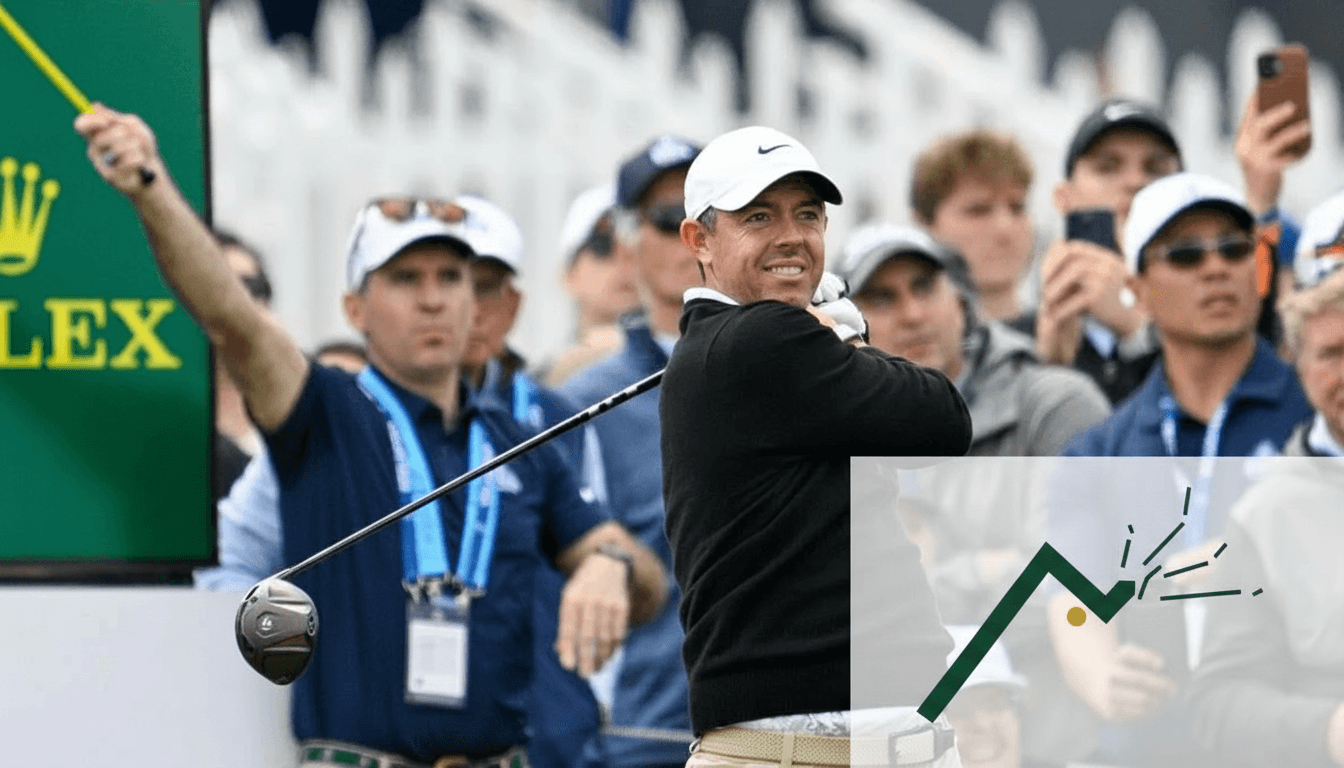
Rory McIlroy's opening round at Aronimink didn't fall apart on one swing — it unravelled across holes 14 through 17 with four consecutive bogeys. His driver leaked right early, so he adjusted his aim left mid-round. That overcorrection became the real problem, turning a manageable miss into a pattern that followed him through the closing stretch. It's a sequence that reveals far more about decision-making under pressure than it does about his swing — and the full picture explains why.
What Happened Over McIlroy's Final Four Holes at Aronimink
When Rory McIlroy walked off Aronimink's closing stretch on 14 May, he'd posted four consecutive bogeys to end his opening round — a deterioration that tells you more about pressure and resilience than about any single missed fairway.
Early in his driving, he started leaking to the right. He adjusted mid-round, shifting his aim left to compensate. That correction overshot, producing left misses through the closing holes.
His driver leaked right. He overcorrected left. The fix became the problem.
Each bogey followed the new pattern, not the original one.
His bogey finish wasn't a passive decline. Post-round, he admitted he'd been actively tinkering between shots rather than committing to one decision at a time. That kind of mid-round interference reflects anxiety suppression, where a player tries to override uncomfortable feelings with mechanical fixes rather than regulating them.
The Driver Fix Rory McIlroy Tried Mid-Round
Mid-round, McIlroy introduced a conscious adjustment to counter the rightward leak — shifting his aim and likely altering his perceived face or path target to push the ball left.
That's what a mid-round swing correction looks like from the inside: a spoken instruction dropped into a trained movement that doesn't need words.
The problem isn't the swing flaw - It's the attentional choice. Rory's working memory was already carrying score, wind, and lie.
Adding a live mechanical cue meant his trained pattern now competed with a conscious override — and the override won, badly, leftward.
When performance anxiety compounds this further, the stress response physiology — elevated cortisol, muscle tension, and narrowed focus — makes it even harder for the body to execute a movement it already knows how to perform.
What That Mid-Round Correction Costs a Trained Swing
The more reps a movement has, the more damage a conscious instruction does to it. McIlroy's driver swing has millions of rehearsed repetitions behind it — that's exactly what made his mid-round override so costly.
When you manually steer an automated pattern, you're loading working memory at the worst possible moment. The trained structure doesn't disappear; it gets interrupted.
That is the real story behind McIlroy's closing bogeys in Round 1 at the 2026 PGA Championship.
It's also the uncomfortable truth about elite golfer pressure response: the better the player, the more automated structure there's to disturb. Research into the yips suggests this breakdown stems from procedural memory interference, where conscious overthinking disrupts motor patterns that were never meant to be controlled voluntarily.
Next Upgrade — Protecting the Trained Movement
Standing on the 15th tee, a calm caddie doesn't open a technical conversation — they close one.
The Rory McIlroy driver miss in the PGA Championship 2026 Round 1 was already filed.
The fix belongs on tomorrow's range, not inside the next swing. Your trained movement is the only swing available for the next four holes — protect it from interference. One thought, committed, before you step in.
That's not avoidance; it's architecture.
Shifting attention to a target or outcome, rather than mechanics uses external focus cues to keep movement patterns running without conscious disruption.
Explore how a structured pre-shot routine keeps conscious instruction from hijacking automated patterns — and visit our Thought Architecture hub to build that protection deliberately.
Try it free
Ready to organise your mental game?
Capture your swing thoughts, set your focus, and play with clarity.


Related reading
Jon Rahm's Strategy for External Noise at the 2026 PGA Championship
Jon Rahm shelved LIV funding news until after his round at the 2026 PGA Championship. The information discipline that protects a Tour pro's competitive state.
How Nelly Korda Won the 2026 Chevron Championship Without Fixing Her Putting
Nelly Korda won the 2026 Chevron Championship by refusing to fix her putting between rounds. Acceptance, not adjustment, closed out the win.
Matt Fitzpatrick Beats Scottie Scheffler in a Playoff by Treating Pressure Like an Away Win
Matt Fitzpatrick beat Scottie Scheffler in a playoff at the RBC Heritage by reframing crowd hostility as fuel and resetting to zero for the extra hole. What his football analogy, his four-iron commitment, and his honest self-assessment reveal about managing pressure without trying to block it out.