
Jon Rahm's Strategy for External Noise at the 2026 PGA Championship
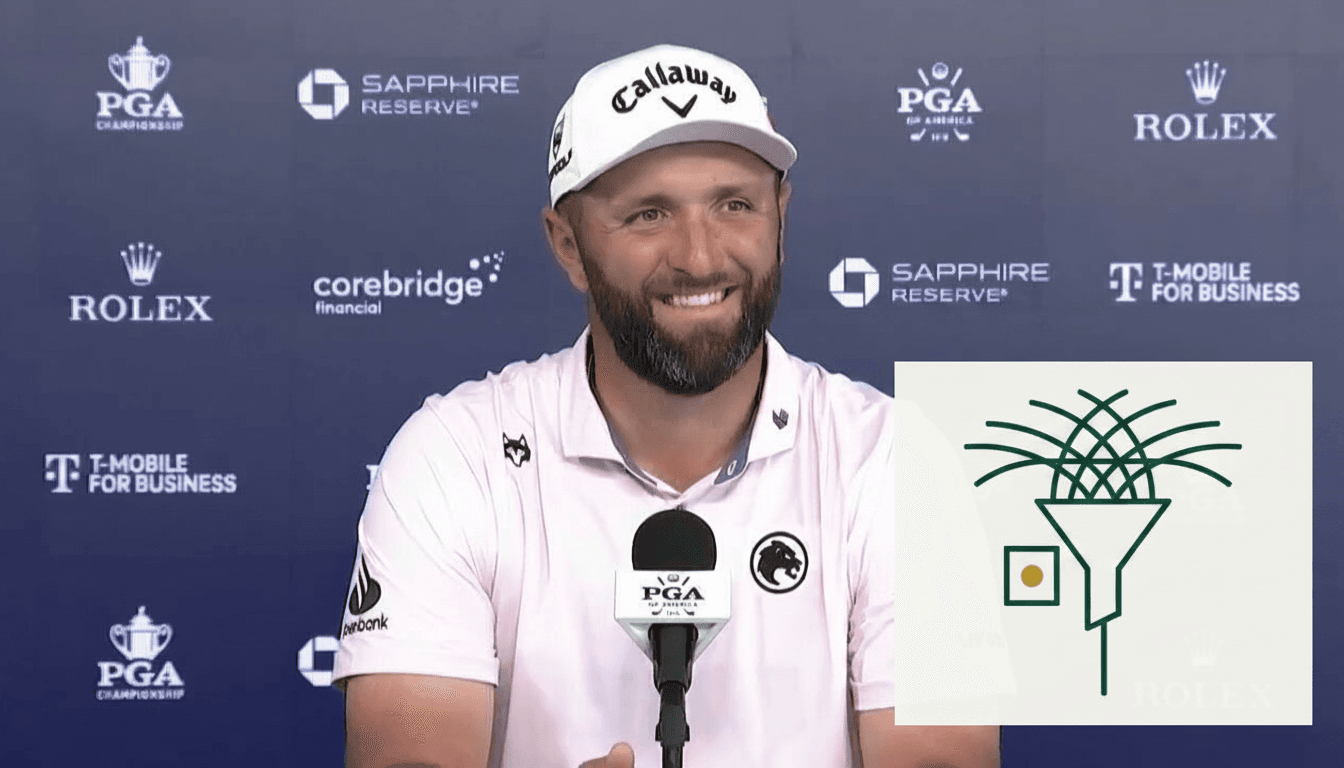
When LIV's funding collapse hit the news mid-round at Aronimink, Jon Rahm refused to engage. He acknowledged the story existed but stated he wouldn't take on anything outside his control during competition. He committed to addressing it fully in the press room Sunday if he returned. That's triage, not avoidance — he protected his working memory when it mattered most. Stick around, and you'll see exactly how to build that same filter for your own game.
What Happened When Jon Rahm Was Asked About LIV
During Saturday's third round at Aronimink, reporting broke that the Saudi Public Investment Fund had reportedly ended its funding for LIV Golf — a story with direct material consequences for Rahm, who's contracted to the league.
The story was active in golf media throughout the week. It was the kind of news Rahm could not have missed even if he had wanted to.
Asked about it post-round, he didn't engage.
"I'm not going to take on anything outside of what I can control," he said, adding that he'd address it fully if he returned to the press room Sunday.
This kind of deliberate filtering mirrors stress inoculation training, a mental preparation method that trains athletes to compartmentalise disruptive stimuli before and during competition.
Maintaining competitive state under pressure came first.
The Discipline of Filtering, Not Ignoring
What Rahm did wasn't avoidance — it was a deliberate act of triage. He acknowledged the LIV funding news existed, declined to engage with it mid-competition, and set it aside with a specific commitment: answer after the round, if there's a round to answer for.
That is the operational model — and it works because of how attention actually behaves under competitive pressure.
Your working memory is finite. High-stakes external information — even career-defining news — consumes bandwidth the next shot actually needs.
Golf mental performance isn't about pretending problems don't exist. It's about when you let them in. Rahm chose the tee sheet over the press room. Deliberately. This is why elite players rely on arousal regulation systems rather than in-the-moment coping tactics — the structure is built before the noise arrives, so there's no decision to make under pressure.
What This Means for You
Rahm's filtering discipline runs on resources you do not have. He has a media team that handles his press window, an agent who absorbs the business news, and a contractually defined moment when he is required to answer questions and when he is not.
Your version of the same problem looks different: you check your phone between holes, your group talks about work on the tee, and no one is filtering anything on your behalf. The asymmetry is real, but the underlying principle scales down — competitive state is a finite resource, and what you let into your attention costs you a shot whether you notice or not.
Rahm at Aronimink is the fourth named player at a 2026 elite event using this same discipline. Nelly Korda refused to take advice at the Chevron Championship in April. Rory McIlroy filtered his information intake at the Masters. Matt Fitzpatrick did the same at the RBC Heritage. Four players, four events, one discipline. The pattern is what major-championship mental performance looks like at the elite tier — and what is worth borrowing at every tier below it.
The asymmetry is real, but the principle still applies: competitive focus is a finite resource, and whatever you let into your attention during a round costs you performance, whether you feel it or not. When external pressure mounts, your body triggers a physiological stress response that directly interferes with the fine motor control your swing depends on.
Next Upgrade — Building Your Own Filter
The gap between knowing the principle and having a mechanism for it is where most competitive golfers stall. Jon Rahm at Aronimink showed what managing distractions in golf actually looks like in practice.
Three steps make it operational:
- Before your round, decide what you'll engage with between holes — and what you won't. That pre-commitment is your filter.
- When unwanted thoughts arrive, acknowledge them and consciously park them for after the round. Don't fight them.
- Name a specific time you'll return to them. The deferral must be real.
The reason step two works is that it relies on emotional regulation, not suppression, which research consistently shows backfires by amplifying the thoughts you're trying to eliminate.
For more on protecting attention amid competition, see our focus playbook and the Pressure & Resilience hub.
You don't get to choose what lands on your plate mid-round. News breaks, thoughts intrude, stakes rise. But you do get to choose what you carry onto the next tee.
Rahm's filter isn't a mental trick — it's a trained response. Build yours before you need it. Because the moment external noise gets loudest is exactly the wrong time to figure out how to tune it out.
Try it free
Ready to organise your mental game?
Capture your swing thoughts, set your focus, and play with clarity.


Related reading
Rory McIlroy's Final Four Holes at Aronimink in the 2026 PGA Championship
Rory McIlroy ended his opening round at Aronimink with four straight bogeys after trying to manually fix his driver. What happens when conscious control replaces trained instinct?
How Nelly Korda Won the 2026 Chevron Championship Without Fixing Her Putting
Nelly Korda won the 2026 Chevron Championship by refusing to fix her putting between rounds. Acceptance, not adjustment, closed out the win.
Matt Fitzpatrick Beats Scottie Scheffler in a Playoff by Treating Pressure Like an Away Win
Matt Fitzpatrick beat Scottie Scheffler in a playoff at the RBC Heritage by reframing crowd hostility as fuel and resetting to zero for the extra hole. What his football analogy, his four-iron commitment, and his honest self-assessment reveal about managing pressure without trying to block it out.