
Golf Scramble Strategy: How to Win as a Team
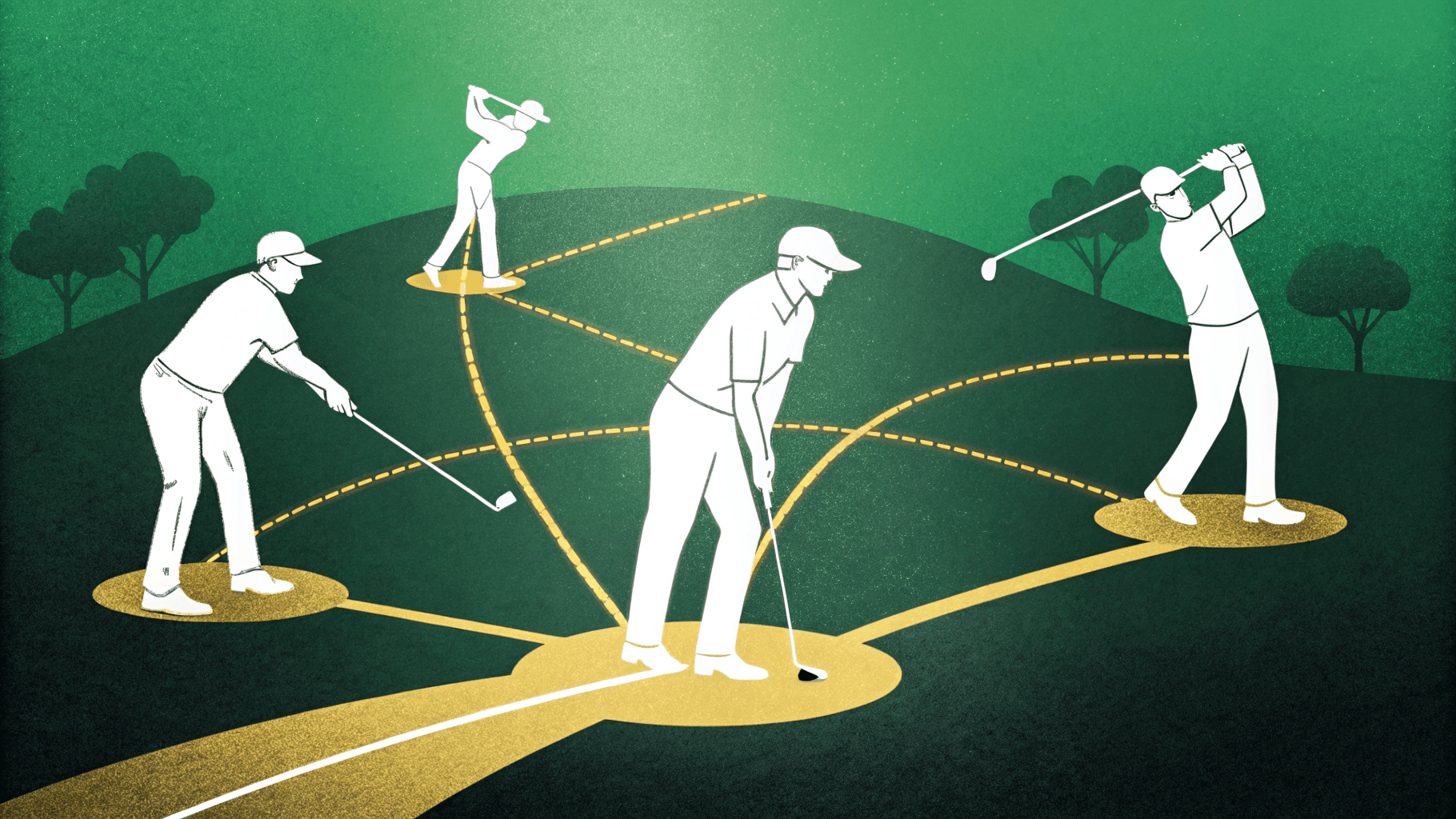
To win a golf scramble, you need smart team strategy, not just raw talent. Start your tee shot order with your most accurate player and finish with your longest hitter. Always pick the ball with the cleanest lie and best angle into the flag, not the one that travelled farthest. Save your mulligans for short putts inside ten feet, and sequence your putts worst-to-best. The strategy goes deeper from there.
What Is a Golf Scramble and Why Does Team Strategy Matter?
A golf scramble is a team format where every player tees off on each hole, the team selects the best shot, and everyone plays from that spot until the ball is holed. It's a format that rewards smart decision-making as much as raw talent.
That's why golf scramble strategy matters more than most players realise. Without a clear plan, you'll leave strokes on the course. With one, you'll consistently create birdie opportunities.
Without a clear scramble strategy, you'll leave strokes on the course — and birdie opportunities behind.
A strong team golf strategy accounts for every phase of the hole — tee shots, approach shots, and putting. You need to know who hits first, which shot to select, and when to play aggressively versus conservatively.
The scramble strategy in golf also involves building a team with complementary skills. A long hitter, an accurate driver, a sharp iron player, and a reliable putter together outperform any group of uniformly able players. Research in sports psychology shows that teams perform better when players develop pre-shot mental routines that maintain focus and consistency under the lower-pressure conditions of a scramble format.
Build the Right Scramble Team With Complementary Skills
You don't need a team of scratch golfers to dominate a scramble—you need the right mix of skills working together.
Pair a long hitter who bombs drives with an accurate iron player who finds greens, add a short-game specialist who escapes trouble, and anchor the group with your best putter.
Complementary roles beat uniform talent every time because each player covers another's weaknesses, keeping the team in contention on every hole.
When the pressure mounts on a critical hole, having a teammate who excels at resilience under pressure prevents one bad shot from spiralling into a team collapse.
Roles That Matter Most
Building the right scramble team starts with understanding that complementary skills beat uniform talent every time. You need players who cover each other's weaknesses rather than mirror each other's strengths.
Your long hitter creates distance advantages, especially from forward tees. Your accurate driver keeps the ball in the fairways, giving everyone workable positions.
Your strong iron player attacks greens from 150 yards out, setting up genuine birdie chances.
Your short-game specialist rescues the team from difficult lies and tight spots.
Your best putter converts opportunities into actual scores.
You don't need four scratch golfers. You need one player who excels in each critical area.
When every role is filled deliberately, your team functions like a single well-rounded golfer capable of handling anything the course throws at you.
Mixing Skills Strategically
- Distance vs accuracy — pair your long hitter with a reliable fairway finder so you're never scrambling from the rough.
- Iron play vs short game — balance a strong iron player with someone who rescues difficult lies around the green.
- Putting depth — include at least two confident putters, so pressure never falls on one person.
When your team covers all three phases — tee-to-fairway, approach, and around the green — you eliminate the situations where one bad shot derails the hole.
Complementary chemistry consistently outperforms groups built around uniform skill.
Chemistry Over Uniform Talent
While stacking your scramble team with four scratch golfers might seem like the obvious move, chemistry and complementary skills consistently outperform uniform talent.
A team built around one long hitter, one accurate driver, a strong iron player, and a reliable putter covers every situation a scramble throws at you.
Each player contributes something that the others can't fully replace.
Your bomber creates birdie opportunities from the tee, your accurate driver keeps the ball in play, your iron player attacks greens, and your best putter closes out holes efficiently.
When these roles align, you're not relying on one player to carry the team.
You're building a system where everyone's strength matters at the right moment, and that's what separates good scramble teams from great ones.
Read the Course Before You Tee Off to Find Birdie Holes
Before your round, walk or drive the course to pinpoint which holes offer the best birdie opportunities based on distance, hazard placement, and green accessibility.
Map out the ideal angles for tee shots and approaches so your team knows exactly where to land the ball on each hole.
Pay special attention to reachable par fives, since those holes give your scramble team the best chance to set up easy eagle or birdie putts.
When deciding who hits first on high-stakes holes, use external attention cues to help each player stay focused on execution rather than outcome.
Identify Low-Scoring Holes
Reading the course scorecard before your round gives your team a significant strategic edge in a scramble. You'll want to pinpoint which holes offer the best birdie opportunities before you ever grip a club.
Look for these low-scoring hole characteristics:
- Par 5s — Reachable in two shots, giving your team two birdie attempts from ideal positions.
- Short par 4s — Driveable holes or wedge approaches create easy scoring setups.
- Forgiving par 3s — Wide greens with minimal hazards reward aggressive iron play.
Once you've identified these holes, commit your mulligans and aggressive tactics there. You're essentially building a scoring roadmap, ensuring your team attacks the right moments rather than scrambling reactively throughout the round.
Map Ideal Shot Angles
Once you've spotted your birdie holes, map out the ideal angles for approaching each green. Walk or drive the course beforehand and note where the pin sits, where slopes break, and which side of the fairway opens up the safest entry.
You're not just picking a target—you're engineering your team's path. A shot from the left side might leave a flat uphill putt, while the right side feeds into a tricky downhill break. That difference decides whether your best putter converts.
During play, select the ball that gives you the angle you've already planned, not simply the one that travelled farthest. Distance means little if you're attacking from the wrong position. Smart angles set up makeable birdie putts.
Target Reachable Par Fives
Par fives are almost always your team's best birdie opportunities in a scramble, so identify them before you tee off and decide which ones your line-up can realistically reach in two. Your long hitter becomes invaluable here, turning a three-shot hole into an eagle conversation.
Walk each par five mentally and ask:
- Can your longest hitter reach the green in two** from a solid drive?
- Are there hazards protecting the green** that make laying up smarter?
- Does the fairway angle reward aggressive positioning off the tee?
When a par five is genuinely reachable, prioritise fairway position over everything else. One good drive from your bomber sets up an approach that can attack the flag directly.
Set Your Scramble Tee Shot Order to Control Every Hole
Tee shot order in a scramble isn't random—it's one of your most powerful tools for controlling how each hole plays out.
Start with your most accurate player, not your longest.
Getting a ball in the fairway immediately removes pressure and gives your team a safety net.
Work toward your longest hitter last.
If the fairway's already secured, they can swing aggressively without consequence.
That combination of accuracy first and power last consistently produces better outcomes than any other sequence.
Everyone tees off on every hole.
More shots mean more options, and options win scrambles.
Don't skip a player because you already have a good ball—someone might stripe one even further or find a better angle into the green.
Prioritise position over distance when a smarter angle makes the approach easier.
Getting the order right turns tee shots from guesswork into a deliberate, repeatable system your whole team trusts.
Each player should step up with a single clear intention, since carrying too many swing thoughts creates cognitive load that kills performance under pressure.
Pick the Right Ball Based on Lie, Angle, and Scoring Position
Once your team's drives are down, don't automatically play the longest ball — pick the one with the cleanest lie, since a tight fairway lie beats an extra 20 yards from the rough every time.
The angle into the green shapes everything, so choose the ball that opens up the flag and gives your better players room to attack.
You're not chasing distance here; you're chasing position that turns approach shots into birdie putts. Even when the position is ideal, managing pressure thoughts on the shot that follows is what separates teams that convert birdie opportunities from those that settle for par.
Prioritise Lie Over Distance
When selecting which ball to play in a scramble, resist the temptation to choose the longest drive automatically. A ball sitting 20 yards shorter but perfectly positioned beats a long drive buried in the rough every time. Focus on three key priorities:
- Lie quality — A clean, flat lie gives your next player confidence and control.
- Angle to the pin — The right angle opens attack routes that distance alone can't provide.
- Room to miss — A better position means mistakes stay manageable rather than costly.
You're building momentum hole by hole, so think strategically. The best scramble teams consistently pick the smartest ball, not the longest one, and that discipline separates winners from the rest of the field.
Angle Shapes Your Attack
Beyond lie quality, the angle of your approach shot determines how aggressively you can attack the pin. Even a perfect lie loses value if the angle forces you into a tucked pin or a dangerous miss zone.
Choose the ball position that opens the green up. If one shot sits on the left side of the fairway and the pin is cut right, that angle invites a controlled fade into more green. A centred or right-sided ball might force a more demanding shot shape.
You're not always picking the closest ball—you're picking the smartest entry point. Better angles give your stronger iron players room to attack, and that's what converts birdie opportunities instead of settling for routine pars.
Position Beats Pure Distance
Angle and lie work together, but they only tell part of the story—scoring position ties it all together. You're not just picking the best ball; you're picking the one that gives your team the clearest path to a birdie.
Prioritise these three factors when selecting your shot:
- Lie – A clean lie beats extra distance from the rough every time.
- Angle – A straight-on approach removes guesswork and reduces miss risk.
- Scoring position – Choose the ball leaving the shortest, most manageable putt.
Distance flatters, but position wins holes.
If a shorter ball sits perfectly in the fairway while the longer one fights rough, you take the shorter ball without hesitation.
Precision thinking separates winning teams from hopeful ones.
Manage Scramble Approach Shots to Attack Flags, Not Avoid Them
Unlike stroke play, a scramble gives your team a safety net that changes how you should think about approach shots. You don't need to aim at the fat part of the green. Instead, attack the flag.
Send your least-talented player first. Their shot sets a conservative baseline, so your better players can swing freely and aggressively at the pin. If someone puts a ball on the green early, that pressure disappears completely for everyone hitting after them.
Choose the shot that offers the best angle, lie, or room to miss short rather than simply the longest hit. A wedge from 90 yards into a tucked pin beats a 6-iron from a poor lie every time.
Your goal isn't to avoid bogeys — it's to create birdie opportunities. The scramble format rewards teams that attack. Use that safety net aggressively, and you'll consistently give your best putter short, makeable looks.
Use Mulligans and Scramble Cheats Where They Win the Most Strokes
Mulligans and scramble cheats are finite resources, so spend them where they recover the most strokes. Wasting a mulligan on a long par-5 drive that still lands in the rough costs you nothing — but wasting one on a routine 8-iron you'd hit again anyway squanders its value entirely.
Deploy them strategically using these priorities:
- Short putts inside 10 feet — converting these directly lowers your score, and a mulligan here nearly guarantees the stroke.
- 100-yard approach shots — you're close enough to control the result, maximising the cheat's impact.
- Poor lies that block a clean swing — use cheats to relocate the ball before a crucial approach, not after damage is done.
In Texas Scramble formats, you'll also want to burn mulligans early to satisfy minimum drive quotas, freeing your best hitters to contribute naturally on later holes.
Sequence Your Scramble Putts to Give Your Best Putter the Best Read
Putting order in a scramble isn't random — it's your most underrated tactical lever on the green. Send your worst putter first. They're not sacrificial — they're gathering intel. Every roll reveals break, speed, and where the putt finishes, giving your team real data instead of guesswork.
Putting order isn't random — it's your most underrated tactical lever on the green.
Your second-best putter goes next, applying what the first putt showed. If they convert, great. If not, they've confirmed to read further.
Save your best putter for last. By then, they've watched two putts trace the exact line they're about to take. They're not guessing — they're executing with full information.
Everyone putts every hole, keeping sharp and contributing useful reads throughout the round. Don't let anyone sit out mentally.
This sequence transforms putting from individual pressure into a team intelligence system. Structure it correctly, and your best putter steps up already knowing exactly what the putt is going to do.
Stop Playing It Safe When the Scramble Format Rewards Aggression
When you're playing a scramble, the format itself is your safety net — so stop treating every shot like you're playing stroke play. You've got multiple players hitting from the same spot, which means a bad shot rarely costs you anything.
Use that freedom aggressively:
- Attack tucked pins instead of aiming for the fat part of the green.
- Have better players swing hard once someone's already hit a safe shot into the fairway.
- Chase birdies on reachable par-5s rather than laying up out of habit.
The scramble rewards teams that take calculated risks, not cautious ones.
If your least-talented player hits first and lands it safely, your stronger players should fire at the flag without hesitation. Conservative play produces pars. Aggressive play produces birdies — and birdies win scrambles.
How to Hold a Scramble Score Together When the Pressure Is Real?
Holding a scramble score together under pressure starts with your putting order. Send your worst putter first. They remove the pressure of setting the tone and give your better putters a line to read. Your second-best putter goes next, and your best putter closes it out with full information from every previous attempt.
Save your mulligans for short putts inside ten feet. That's where they convert directly into saved strokes, not just better positions. Don't waste them on long putts where three-putting is still possible.
Mulligans belong inside ten feet. That's where one stroke saved is actually one stroke saved.
When approach shots tighten up, have your least-confident player hit first. If they find the green, your better players can attack the flag. If they miss, your skilled iron players know exactly what correction to make.
Pressure shrinks when everyone has a role. Trust your order, execute your plan, and you'll protect that score when it matters most.
References
- https://thegolfnewsnet.com/ryan_ballengee/2026/03/13/how-to-win-a-golf-scramble-tips-for-success-from-an-expert-127334/
- https://www.pga.com/story/three-ways-to-win-a-scramble
- https://www.scga.org/blog/9336/best-strategies-for-scramble-tournaments/
- https://blog.golfnow.com/mastering-the-golf-scramble-tips-rules-and-strategies-for-success/
- https://www.golfmonthly.com/features/how-to-win-your-next-texas-scramble-ive-stumbled-upon-the-perfect-formula
- https://www.youtube.com/watch?v=vlHVnTOG96E
Try it free
Ready to organise your mental game?
Capture your swing thoughts, set your focus, and play with clarity.


Related reading
Nelly Korda's Approach to Memorial Park at the 2026 Chevron Championship
Nelly Korda refuses to ask PGA Tour players about Memorial Park before the Chevron. It looks like stubbornness. It's expert cognitive load reduction.
Alternate Shot Golf Strategy: How to Play Foursomes Without Losing Friends
Alternate shot demands trust, communication, and shared mental architecture — two players committing to decisions together without second-guessing each other under pressure.
What Does a Golf Caddie Actually Do? (It's Not What You Think)
A caddie does far more than carry your bag. They're processing wind, lie, slope, and your emotional state — then compressing it into a single clear call. That's cognitive load management in action.