
The Golf Putting Routine That Eliminates Three-Putts
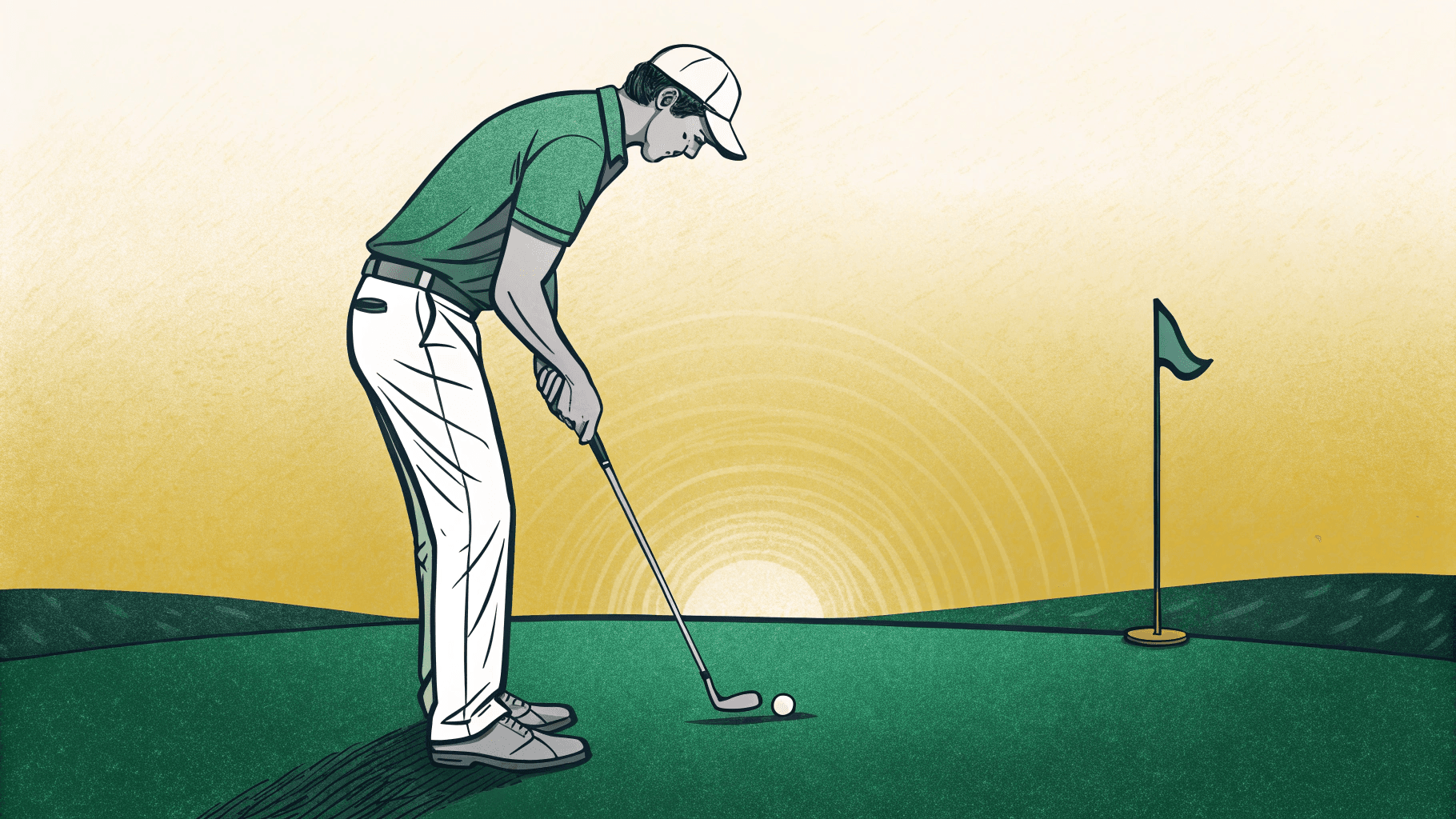
Three-putts rarely come from a bad stroke—they come from misreading the break and losing speed control before you ever pull the putter back. Your pre-putt routine needs to lock in the apex of the break and commit to speed before you step into your stance. Fix those two drivers, and awkward second putts disappear. Stick around, and you'll discover exactly how to make that happen.
Why Most Golfers Three-Putt (It's Not Technique)
Most golfers assume three-putts come from a flawed stroke, but that's rarely the culprit. The real problems are misreading breaks and poor speed control. You're leaving yourself awkward second putts because your first putt either drifts to the low side or races past the hole.
A structured golf putting routine addresses both issues directly. Without one, you're practicing aimlessly, grooving bad habits instead of fixing them. Your putting routine golf sessions need specific drills targeting break reads and distance judgment, not just repetitive strokes.
Solid golf putting practice routines train your eyes and feel simultaneously. A consistent pre-putt process with external focus cues has been shown to directly reduce three-putts by improving both read accuracy and speed control before you ever take the club back. When you understand why you're three-putting, you can target the actual weakness. Fix the read and the speed, and your stroke will handle the rest.
Why Your Pre-Putt Routine Determines Everything
Once you understand what causes three-putts, the next step is building a pre-putt routine that prevents them before your putter ever touches the ball.
Prevention starts before impact—understanding what causes three-putts is the foundation every reliable putting routine is built on.
Your routine isn't just ritual—it's how your brain transitions from uncertainty to committed action.
Without it, you're guessing at speed and break instead of executing a clear plan.
A consistent pre-putt routine should cover three critical decisions:
- Read the break – identify where the ball must enter the cup, not just the general curve
- Choose your apex – pick the highest point of the break as your actual target
- Commit to speed – decide how firmly you'll strike before you step into your stance
Skipping any one of these creates hesitation, and hesitation creates three-putts. The same principle applies across every shot in golf, where structured mental triggers signal your brain to move from analysis into execution.
Master Break Reading With the Breaking Putt Drill
Reading break accurately is the single skill that separates consistent two-putters from golfers who routinely hand away strokes on the green. The Breaking Putt Drill trains your eyes and instincts simultaneously.
Place six balls along your expected break line, starting closest to the hole. Begin with the shortest putt first, then work outward. This progression matters because each successful putt reinforces your read before you attempt the longer, more demanding ones.
This drill directly addresses the most common amateur mistake: missing on the low side. When you consistently underestimate break, you're giving the hole no chance to accept your ball.
Building a practice routine that transfers to the course means simulating real decisions on the green, not just repeating mechanical strokes in a comfort zone.
Practice this on your practice green regularly, and you'll start converting breaking putts you previously left short and helpless below the cup.
Stop Missing Low-Side Putts With the Committing to Curve Drill
Even when you've nailed the break read, there's a second failure point that kills the putt: indecision at the moment of execution. The Committing to Curve Drill fixes that directly.
Place four tee pegs inside the expected bend point, then aim your straight line at them. Narrowly miss the final tee to hit the apex, letting the break carry the ball home. Treat it like a short straight putt rather than chasing the hole visually. Focusing on a single apex target works because limiting yourself to one active swing thought reduces cognitive load and keeps your stroke free from interference.
This drill builds:
- Commitment to your read without second-guessing mid-stroke
- Apex targeting that replaces hole fixation with a reliable intermediate focus
- Stroke clarity by simplifying a curving putt into a short straight one
Indecision disappears when your target becomes concrete.
Build Short-Putt Consistency With the Round-the-Clock Drill
Place 12 balls around the hole in a clock formation, starting with four-footers and progressing to five- and six-footers as you hole each one sequentially.
Working clockwise creates real pressure, since you can't advance until you've made every putt at each distance.
This structured progression trains you to handle short putts with the same focus you'd bring on the course, making three-putts increasingly rare. Just as a purposeful range routine transforms full-swing practice from aimless ball-striking into structured improvement, applying the same intentional framework to your putting sessions accelerates skill development far more than casual repetition.
Clock Formation Setup
To set up the Round the Clock Drill, position 12 balls around the hole like numbers on a clock face. Each ball represents an hour, so you're creating equal spacing at every angle.
Start 4 feet from the hole to build a manageable foundation before increasing difficulty.
Key setup points to remember:
- Place each ball precisely at four feet using a tape measure or alignment rod
- Ensure you're working on a green with varied slopes to practice multiple break directions
- Progress to five-foot and six-foot distances only after holing every four-footer
This sequential structure matters because it simulates real pressure. You can't advance until you've completed each ring successfully, forcing focus and commitment with every stroke you take.
Pressure Simulation Benefits
Once you've locked in your setup and committed to advancing only after sinking every putt in each ring, the drill starts doing something beyond refining your stroke—it builds pressure tolerance.
Each ball you face carries real consequences. Miss one, and you restart that ring. That simple rule transforms routine practice into something that mimics tournament nerves.
As you work clockwise through 12 positions at four, five, and six feet, your focus sharpens because failure has a cost.
You're training your mind to stay composed when stakes are present. Even tour pros occasionally three-putt, but consistent exposure to this kind of simulated pressure makes it rare.
You'll carry that mental steadiness directly onto the course, where it matters most.
Sequential Distance Progression
Start at four feet, sinking all 12 balls around the clock before stepping back to five feet. Each distance demands you complete the full circuit before advancing. This sequential structure builds genuine confidence rather than selective practice.
The progression works because it mirrors real-game pressure, forcing consistency across multiple angles and subtle break variations.
Why sequential distance progression matters:
- Accountability built in — you can't skip difficult positions around the clock
- Break angle variety — each clock position presents unique slope challenges, sharpening your read
- Confidence compounding — completing four-foot circuits before reaching six feet reinforces success patterns
Missing a ball resets you to that distance, keeping standards high. This structured accountability transforms short putting from your weakness into your strength, directly cutting your three-putt frequency.
Speed Control Is the Fastest Way to Cut Three-Putts
Among all the putting skills you can develop, speed control delivers the fastest return for reducing three-putts. When your distance is off, even a perfectly read putt leaves you scrambling with a difficult second putt. That's where the Speed Control Thread Drill earns its value.
Set two four-foot threads near the hole — one at the front edge, one three feet behind. Then putt from 3, 6, 9, and 12 feet, aiming to stop the ball between them or drop it in. As distances increase to 15, 20, and 25 feet, adjust the front thread one foot short. From 30 to 45 feet, move it three feet short. This structured progression trains your feel across every realistic putting distance you'll face on the course.
Use Gate and Quarter Drills to Sharpen Two-Putt Range
Speed control gets you in the neighbourhood, but gate and quarter drills pin down exactly where in that neighbourhood your ball stops.
For breaking putts, set two tees at the apex, spaced two ball-widths apart.
Roll five sets of three balls through that gate, keeping each within two-putt range.
For straight putts, place quarters beside your line at 10, 15, 20, and 25 feet.
- Stop three balls equidistant from each quarter before advancing
- Repeat from varied distances and different break angles
- Target completing 18 putts successfully per session
These drills train both precision and adaptability.
You're not just hitting putts—you're building repeatable distance judgments across conditions.
That consistency is what transforms three-putt situations into confident two-putt completions.
How to Structure a Putting Practice Session That Transfers to the Course
Structuring your practice session intentionally is what separates range time from real improvement. Start with the Speed Control Thread Drill to calibrate distance feel across short, mid, and long putts. Then move into the Round the Clock Drill to build short-putt confidence under pressure.
Next, use the Breaking Putt or Committing to Curve Drill to sharpen your break reads. Finish with Gate and Quarter Drills to simulate real two-putt scenarios.
This sequence mirrors what you'll face on the course—speed first, then accuracy, then decision-making under pressure. Keep sessions focused rather than long.
Purposeful repetition with clear feedback builds the habits that transfer. When your practice conditions match course conditions, your results will follow.
How to Keep Your Routine Simple When the Pressure Spikes
When pressure spikes on the course, your routine needs to shrink, not expand.
Take one slow breath before you step in, commit fully to your read, and lock your eyes on a single target—not the hole, not the break, just the spot where you want the ball to start.
Keeping it that simple stops your mind from spiralling and lets your practice take over.
Breathe Before You Putt
Under pressure, your mind races and your routine collapses—that's when three-putts happen. One simple reset stops that spiral: breathe deliberately before you putt.
A controlled breath slows your heart rate, quiets mental noise, and returns your focus to execution rather than outcome. It costs you nothing and takes two seconds.
Build it into every pre-putt routine so it becomes automatic:
- Inhale slowly as you take your final read behind the ball
- Exhale fully before addressing your stance
- Pause briefly after settling over the ball before starting your stroke
This isn't relaxation advice—it's a mechanical anchor. When everything else feels uncertain, your breath stays consistent. That consistency carries your routine through pressure without letting doubt creep into your stroke.
Trust Your Read
Pressure doesn't erase your read—it makes you second-guess it. Once you've read the putt and committed to a line, stop debating. Your first read is almost always your best read. Overthinking mid-routine introduces doubt, and doubt kills tempo.
Use the Committing to Curve drill to train this habit. Pick your apex, aim for it like a short straight putt, and trust the break to do the rest. Don't fixate on the hole—focus on hitting your target. The drill trains your brain to commit rather than hesitate.
When pressure spikes, your routine becomes your anchor. Stick to it: same steps, same pace, same focus. Consistency in your routine builds confidence in your read, even when nerves are screaming at you to change it.
One Target Only
The moment pressure spikes, your brain wants to juggle—hole position, break, distance, consequences. Don't let it. Simplify everything down to one target: your apex point.
Once you've committed to your read, that's your only job. Hit the ball to that spot. Forget the hole entirely.
This single-target focus works because it:
- Converts a curving putt into a straight putt, reducing mechanical confusion
- Eliminates the low-side miss that plagues amateurs who fixate on the hole
- Keeps your stroke rhythmic rather than result-driven
The Committing to Curve Drill reinforces exactly this—treat the apex tee as your hole. Everything else disappears. When you narrow your focus to one precise point, your body executes cleaner, your speed regulates naturally, and three-putts become genuinely rare.
Build Your Practice Around an 18-Putt Goal
Once you've worked through these drills, tie them together by setting a single, measurable goal: complete your practice session in 18 putts or fewer. This benchmark mirrors a full round and keeps every stroke meaningful.
Use the Gate and Quarter Drill's structure to track progress. Cycle through breaking putts, straight putts, and distance control sets, counting each attempt honestly. If you exceed 18, identify where — short putts, speed control, or misread breaks — and return to the targeted drill.
This goal removes aimless repetition from your sessions. You're not just hitting balls; you're solving a defined problem under self-imposed pressure. Over time, that discipline translates directly onto the course, where three-putts become the exception rather than your default.
References
- https://www.golfmonthly.com/tips/3-drills-20-minutes-practice-and-no-more-three-putts
- https://golf.com/instruction/putting/fewer-three-putts-genius-speed-putting-drill/
- https://www.pga.com/story/two-drills-to-help-you-avoid-three-putts
- https://www.youtube.com/watch?v=frTHDRvHQ9c
- https://www.youtube.com/watch?v=4BBGJ-I3F4U
- https://oldduffergolf.com/3-putt-avoidance/
- https://www.titleist.com/teamtitleist/team-titleist/f/golf-tips/63703/watch-eliminate-3-putts
- https://www.youtube.com/watch?v=_d6McowU_fw
Try it free
Ready to organise your mental game?
Capture your swing thoughts, set your focus, and play with clarity.


Related reading
Justin Thomas's Reaction to the Pace Warning at the 2026 PGA Championship
Justin Thomas was warned for slow play at the 2026 PGA Championship, then backed off his next shot to reset. The interruption clause inside a tour player's sequence.
Aaron Rai's Final Round at the 2026 PGA Championship
Aaron Rai won the 2026 PGA Championship with two layers of mental architecture working together: Sunday leaderboard discipline and a structural identity built over decades.
Jon Rahm's Strategy for External Noise at the 2026 PGA Championship
Jon Rahm shelved LIV funding news until after his round at the 2026 PGA Championship. The information discipline that protects a Tour pro's competitive state.