
The Yips in Your Golf Swing: What's Actually Happening in Your System
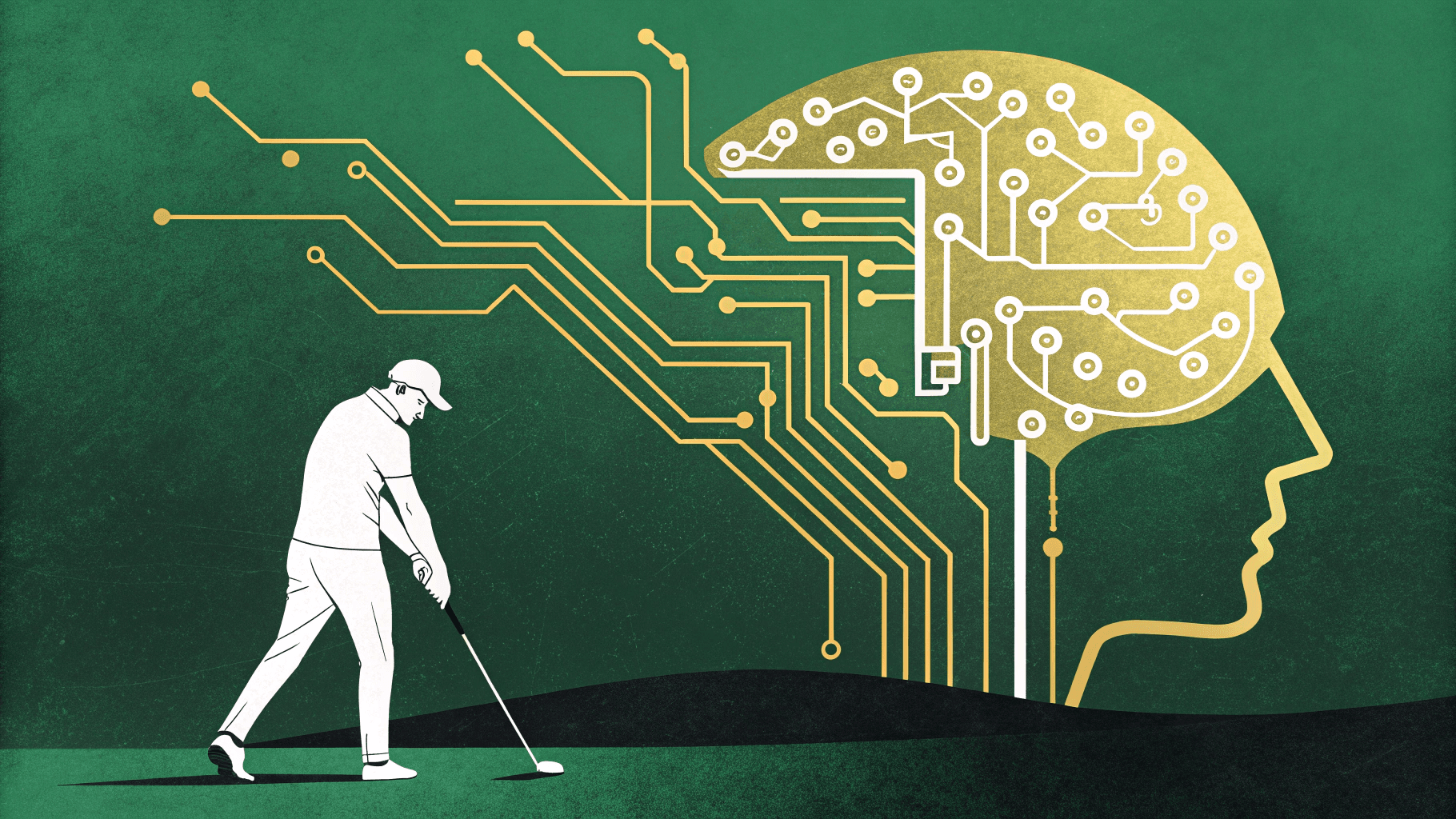
The golf yips aren't a technique flaw—they're an involuntary neurological response where anxiety hijacks your swing and produces jerks, twitches, or freezes you can't consciously stop. Performance pressure triggers your nervous system to interpret the shot as a threat, disrupting the fluid motor patterns your body normally executes automatically. It creates a self-reinforcing cycle where fear of the yips makes them more likely. There's a lot more happening beneath the surface that's worth understanding.
What Are the Golf Yips?
The yips are involuntary muscle spasms, jerks, or freezing movements that strike during a golf stroke, throwing off your accuracy and rhythm.
The yips strike without warning — involuntary spasms and freezes that sabotage your swing when it matters most.
You might experience a sudden twitch, a twist, or a complete hesitation before your backswing — none of which you can predict or control.
That's what separates yips in your golf swing from a technical flaw like a shank.
A shank is a mechanical problem.
The yips are neurological and emotional.
When golf swing yips take hold, they don't follow a pattern.
They hit putts, chips, and full swings alike.
You could freeze over the ball for 30 seconds or feel your hands jerk mid-stroke without warning.
Experiencing yips during a swing once makes future episodes more likely, since anxiety about recurrence actually triggers them.
It becomes a self-reinforcing cycle that's difficult to break.
Even Tour professionals manage intrusive thoughts under pressure, where swing thoughts during execution can either quiet the nervous system or send it into overdrive.
Why Your Brain Causes the Yips
When anxiety takes over, your brain essentially hijacks your swing. The same mental circuits designed to protect you from danger start interfering with your muscle coordination. Your nervous system interprets performance pressure as a threat, triggering tension and involuntary muscle responses at the worst possible moment.
Here's what's actually happening: you're over-controlling your movements. Internal anxiety makes you hyper-focus on mechanics you'd normally execute automatically. That excessive conscious attention disrupts the fluid motor patterns your body already knows how to perform. The result is jerking, freezing, or twitching right when you need smoothness most.
Past yips experiences compound the problem. Once you've felt that involuntary jerk during a putt or chip, your brain anticipates it happening again. Fear of failure and embarrassment builds a feedback loop that becomes increasingly difficult to break. A structured pre-shot routine creates mental triggers that redirect your focus away from outcome anxiety and back toward automatic execution. Your body doesn't forget, and neither does your subconscious.
The Four Types of Yips and How Each Feels
Not all yips feel the same, and knowing which type you're dealing with changes how you approach fixing it.
Putting yips show up as jerky hands, an off-line stroke, or poor distance control. You know the putt, but your hands won't cooperate.
Chipping yips produce chunked, thinned, or completely miss-hit shots, often when you're just a few feet from the green.
Full swing yips interrupt your natural motion with a pause or jerk at the top, making a free swing feel impossible.
Driver-specific yips create a noticeable hitch or tension the moment you try to generate power.
Freezing is its own category entirely — you address the ball and simply can't start your backswing, sometimes for thirty seconds or more.
Each type shares the same root cause: your nervous system overriding your intentions. But each one hijacks a different moment in your swing, which is why a single fix rarely works for all of them. On the greens specifically, golfers who struggle with the putting yips often find that adopting a consistent pre-putt routine helps redirect nervous system interference away from the mechanics of the stroke.
What Happens in Your Mind Before a Yip?
Before you ever twitch a muscle, your mind's already working against you—anxiety builds an invisible pressure that tightens your grip, stiffens your shoulders, and primes your body for failure.
That fear then hijacks your muscle memory, replacing the smooth, practised motion you've grooved on the range with a hesitant, erratic one you don't recognise.
The moment you try to consciously control every inch of your swing to compensate, you've already lost the fluid, automatic movement that good golf demands.
Knowing which driver swing thoughts to keep and which to silence can be the difference between reclaiming your natural rhythm and spiralling deeper into conscious overthinking.
Anxiety Builds Invisible Pressure
Long before a yip ever shows up in your hands or wrists, it's already taking shape in your mind. Anxiety doesn't announce itself loudly. It builds quietly, layering pressure onto each stroke until the weight becomes unbearable.
You might replay a previous mishit before you even address the ball. That memory triggers a fear response, and your nervous system starts bracing for failure. Your muscles tighten. Your focus narrows inward.
Instead of swinging freely, you're now managing a dozen invisible concerns at once.
This internal noise creates the conditions where yips flourish. The harder you try to control the outcome, the more tension overrides your natural movement. What feels like a mechanical problem is actually anxiety expressing itself physically through your swing.
Fear Triggers Muscle Memory
When fear takes hold, your brain doesn't just affect your thoughts—it rewires how your body moves.
Past yip experiences create emotional memories that your nervous system stores alongside physical ones.
The moment you face a similar situation, your brain retrieves both simultaneously.
This triggers a cascade you didn't consciously choose:
- Your muscles tighten before you've even started your backswing
- Your focus narrows onto the exact movement you're trying to avoid
- Your subconscious overrides the smooth motor patterns you've trained
That internal conflict—conscious intention fighting subconscious fear—produces the jerk, freeze, or twitch you recognise as a yip.
You're not losing your skills.
Your brain is prioritising threat response over execution, turning what should feel automatic into something disturbingly unpredictable.
Over-Control Disrupts Flow
Your body can't efficiently serve two masters. When anxiety pushes you toward over-control, you interrupt the fluid neural pathways that normally produce clean, repeatable strokes. The result isn't just tension — it's a breakdown in coordination that triggers the very mistake you're desperately trying to prevent.
This is why the yips feel so cruel. Your effort to control the outcome actually guarantees the one result you feared most.
Why Anxiety Keeps the Yips Coming Back
Once the yips take hold, anxiety becomes the engine that keeps them running. Each bad shot reinforces your fear of the next one, creating a feedback loop that's hard to escape. You're not imagining it — past yips experiences literally prime your nervous system to expect failure again.
This pattern persists because anxiety operates below conscious thought. You can't simply decide to relax and expect results.
Three mechanisms keep anxiety fuelling the yips:
- Memory triggers: A familiar situation — same hole, same club — instantly reactivates previous yip responses
- Anticipatory tension: Your body tightens before the stroke, not during, making prevention feel impossible
- Avoidance reinforcement: Skipping difficult shots temporarily relieves anxiety but strengthens your fear long-term
Breaking this cycle requires more than positive thinking. Overloading your mind with multiple swing fixes under pressure compounds this problem, which is why limiting yourself to one active swing cue helps reduce the cognitive interference that anxiety exploits. You need deliberate strategies that retrain your nervous system's response to pressure and require consistent, structured effort over time.
Why Tour Pros Get the Yips Too?
Elite status offers no immunity from the yips — even Tour pros with decades of experience and millions of dollars on the line have lost entire careers to involuntary twitches and freezes. In fact, professional golfers face unique psychological pressures that accelerate the onset and severity of the yips.
Elite status is no shield. Tour pros have watched entire careers unravel from a single involuntary twitch.
Consider this: the average tournament player develops yips around age 34.8, after years of competitive exposure. That's not a coincidence. Repeated high-stakes performance creates deep neural associations between pressure and involuntary muscular response.
Once you've experienced a yip moment, your nervous system catalogues it. The next time similar conditions arise, it fires that same fearful pattern automatically.
Professionals also over-rely on conscious control, which paradoxically worsens execution. The more you analyse a movement you've done thousands of times, the more you disrupt it.
Tour pros aren't immune — they're actually more vulnerable because the stakes never stop climbing.
How Tour Pros Have Managed the Yips
You might find it reassuring to know that some of the greatest players in history have battled the yips and found ways to push through them.
Bernhard Langer famously reinvented his putting grip multiple times, while Ben Hogan's full-swing yips effectively ended his competitive career.
Famous Pros' Yips Stories
Even the greatest golfers in history haven't been immune to the yips. Seeing how the pros handled their struggles can give you perspective on your own game.
- Bernhard Langer battled putting yips multiple times, switching grips repeatedly to rewire his stroke mechanics.
- Sam Snead developed a side-saddle putting style after conventional putting became unmanageable.
- Tom Watson experienced chipping yips late in his career, openly acknowledging how the condition affected his confidence.
What's striking about these stories isn't the struggle itself — it's how each player adapted rather than quit. They changed techniques, equipment, or mental approaches to keep competing.
Their experiences confirm that the yips aren't a character flaw. They're a neurological and psychological challenge that even elite athletes face.
Techniques That Worked
What separates the pros who survived the yips from those who didn't isn't talent — it's adaptability. When the yips hit, the instinct is to fight them head-on.
The pros who recovered didn't do that. They worked around them.
The most common fix you'll see is a technique change. Switching to a claw or left-hand-low putting grip disrupts the faulty motor pathway your brain's locked into. It forces your nervous system to relearn the movement.
Bernhard Langer did exactly that — multiple times throughout his career.
Others leaned on anchored putters, longer shafts, or switched their dominant hand. Some used beta-blockers to quiet the anxiety driving the spasms.
The point isn't perfection. It's finding what bypasses the glitch in your system.
Can You Actually Beat the Yips?
Beating the yips isn't impossible, but it's rarely a clean victory. Most golfers don't eliminate them entirely — they learn to manage them.
That distinction matters because it shifts your expectations toward sustainable progress rather than a perfect cure.
What "beating" often looks like in practice:
- Reduced frequency — the involuntary movements happen less often, not never
- Faster recovery — you regain composure quicker after a yips episode occurs
- Rebuilt confidence — you stop avoiding the affected shots and re-engage with the game
The psychological and neurological roots run deep, which is why technique adjustments work better than willpower alone.
Changing your grip, switching to a longer putter, or retraining your motor patterns disrupts the ingrained pathways driving the yips response.
You can get back on the course feeling functional again.
That's a realistic, meaningful win — and for most golfers, it's enough.
References
- https://pyramidgolf.com/blogs/news/how-to-stop-the-yips-in-golf-once-and-for-all
- https://collegeofgolf.keiseruniversity.edu/how-to-cure-the-yips-in-golf/
- https://golfstateofmind.com/how-to-cure-the-yips/
- https://pmc.ncbi.nlm.nih.gov/articles/PMC12043691/
- https://www.puttingyips.com/2011/what-are-the-golf-swing-yips/
- https://www.youtube.com/watch?v=9YhGMqxmVvQ
Try it free
Ready to organise your mental game?
Capture your swing thoughts, set your focus, and play with clarity.


Related reading
Jon Rahm's Strategy for External Noise at the 2026 PGA Championship
Jon Rahm shelved LIV funding news until after his round at the 2026 PGA Championship. The information discipline that protects a Tour pro's competitive state.
Rory McIlroy's Final Four Holes at Aronimink in the 2026 PGA Championship
Rory McIlroy ended his opening round at Aronimink with four straight bogeys after trying to manually fix his driver. What happens when conscious control replaces trained instinct?
How Nelly Korda Won the 2026 Chevron Championship Without Fixing Her Putting
Nelly Korda won the 2026 Chevron Championship by refusing to fix her putting between rounds. Acceptance, not adjustment, closed out the win.