
What Happened to Rory McIlroy's Mental Operating System on Saturday at the 2026 Masters
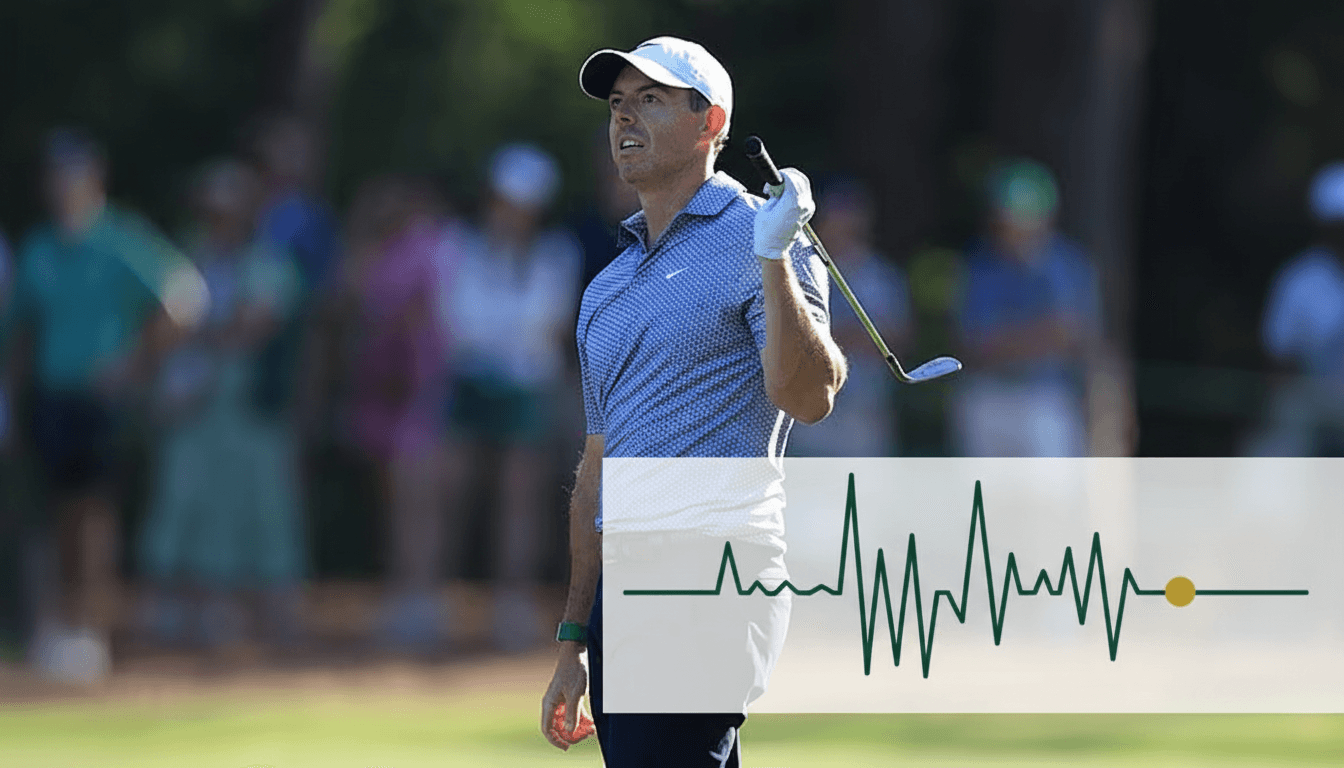
On Saturday at Augusta, McIlroy's mental operating system didn't collapse — it exposed that it was never fully built for real pressure. Flow carried him through Friday, but Saturday stripped that away. Without momentum as support, he couldn't access his mechanics when it mattered most. Cautious swings replaced committed ones, and Amen Corner revealed the cracks. Saturday at Augusta explains why your mental system only counts when everything goes wrong.
When the System Gets Tested — What Saturday at Augusta Revealed
If you've ever watched your own mental game hold up beautifully in calm conditions only to collapse the moment real pressure arrived, Saturday at Augusta was built for you.
Friday showed three mental systems running smoothly. Saturday stress-tested every one of them.
McIlroy's "keep swinging" mantra collided with the instinct to protect a shrinking lead.
Young built confidence incrementally and produced the round of the day from eight back.
Scheffler played freely because he had nothing to lose.
Lowry reset after an adrenaline spike in real time.
The lesson cuts clean — your mental system only counts when things go wrong.
When pressure arrived on Saturday, the body became the opponent — the stress response floods the system with cortisol and adrenaline, tightening muscles, narrowing focus, and quietly dismantling the mechanics that looked effortless an hour earlier.
Rory McIlroy's Amen Corner Collapse — What Happens When a Mantra Meets Real Pressure
On Friday, McIlroy birdied from the trees — the mantra carried him through imperfect conditions because the flow was there to meet it.
On Saturday, when the flow departed and he'd to operate on process alone, the cracks showed immediately: missed fairways became bogeys instead of escapes, and cautious swings replaced committed ones.
That's the real test of any mental system — not whether it works when you're loose and confident, but whether it holds when the lead's shrinking and Augusta's asking you its hardest questions. What Saturday exposed is the difference between suppressing anxiety and genuinely regulating it — one masks the pressure temporarily, the other builds the internal structure to withstand it when a mantra alone isn't enough.
The Difference Between Friday and Saturday — When Flow Leaves, What Remains?
Flow is a mood, not a system — and Saturday exposed exactly that distinction in McIlroy's game.
On Friday, the pressure didn't register because momentum carried him.
Every awkward lie still produced clear visualisation.
Saturday stripped that away, and what remained wasn't enough.
Golf pressure management demands that your process functions independently of how you feel.
McIlroy's birdies at 14 and 15 proved his mechanics still worked when he accessed them.
But Amen Corner proved he couldn't access them under the weight of protecting a lead.
If your system only works in flow, you don't have a system.
A reliable mental operating system requires arousal regulation that kicks in before the shot, not after the damage is done.
Cameron Young's Slow-Build Confidence — Why Incremental Evidence Beats Sudden Belief
You don't manufacture confidence in a vacuum — you build it from evidence, and Cameron Young knows that better than most.
He described the hardest part of his career as staying constructive when results weren't validating his effort, extracting small positives from average performances and near-misses rather than waiting for a breakthrough to flip a switch.
That slow accumulation of proof, not a single moment of clarity, is what carried him to a share of the lead at Augusta.
This mirrors what psychologists call incremental confidence building, where each small win or recovered shot becomes a data point that reinforces belief over time rather than demanding a sudden, wholesale shift in self-perception.
"The Hardest Thing Is Developing Confidence When Things Aren't Going Great"
Cameron Young's answer to how he built confidence before he'd won anything significant cuts straight to the core of what separates durable self-belief from the fragile kind: he didn't wait for a win to validate him.
Seven runner-up finishes could've shattered him. Instead, he treated each one as proof he belonged.
That's the kind of pressure most players can't survive — repeated near-misses without collapse.
By Masters 2026 Round 3, he'd already processed the crowd favouring McIlroy. He'd already decided it didn't matter.
Confidence built on proximity to winning is harder to crack than confidence built on wins alone. Unlike players whose performance anxiety escalates into neurological motor dysfunction, Young's incremental evidence-based belief system gave his nervous system something stable to run on.
Scottie Scheffler's Freedom and Shane Lowry's Reset — Two Pressure Lessons from Behind
While McIlroy was battling to protect a lead, two players behind him were freed from that burden entirely — and both made the most of it.
Scottie Scheffler's Masters 2026 charge — a bogey-free 65 from 12 back — wasn't built on fixing something broken. He simply executed.
That's mental resilience golf produces when there's nothing to protect.
Lowry's hole-in-one at six could've shattered his focus with adrenaline. Instead, he deliberately calmed down, hit a composed tee shot on seven, and proved his mental system held.
The lesson: freedom from pressure doesn't create good golf — it reveals it.
Developing that composure before competition arrives is exactly what stress inoculation training is designed to build — exposing players to controlled pressure. Hence, their nervous system learns how to perform through it.
What You Can Learn — Why Your Mental System Matters Most on Your Worst Day
If you've ever stood over a shot with your swing thoughts scrambled and your pre-shot routine suddenly feeling foreign, this article was written for you.
You don't build a mental system for your best days — you build it for your worst.
McIlroy's Saturday proves even strong systems collapse under accumulated doubt.
Young's Saturday proves confidence built on small, consistent evidence outlasts confidence built on a single peak.
Lowry's tee shot after his ace proves your system's value lives in the ordinary moments, not the spectacular ones.
Keep it simple.
You need one thing you can access when discipline is all you have left.
When doubt accumulates, and conscious thinking floods in, the basal ganglia's automated movement patterns that make a reliable swing possible are the first thing your brain disrupts.
Conclusion
You just watched a masterclass in what pressure actually does to a mental system. McIlroy didn't lose his swing — he lost his operating instructions. When the stakes got real, protection replaced aggression, and the whole thing unravelled. That's the lesson you're taking home. Your mental system doesn't matter on easy days. It only matters when everything's on the line, and your instincts are screaming at you to play it safe.
Try it free
Ready to organise your mental game?
Capture your swing thoughts, set your focus, and play with clarity.


Related reading
Rory McIlroy Wins the 2026 Masters With a Number, Not a Mantra — What Changed on Sunday
McIlroy's Masters defence nearly collapsed on Sunday — then a single number replaced his broken mantra and governed every decision on the back nine. What his 14-under target, Rose's lost commitment at Amen Corner, and Scheffler's bogey-free weekend reveal about building mental systems that survive real pressure.
Rory McIlroy's First-Tee Nerves at the 2026 Masters: What His Honesty Reveals About Pressure
Rory McIlroy's hands were shaking on the first tee at Augusta — and he talked about it openly. What the defending champion's honesty reveals about pressure changes how you should think about your own nerves.
Jon Rahm's Strategy for External Noise at the 2026 PGA Championship
Jon Rahm shelved LIV funding news until after his round at the 2026 PGA Championship. The information discipline that protects a Tour pro's competitive state.