
Online Golf Lessons: The Complete Guide for 2026
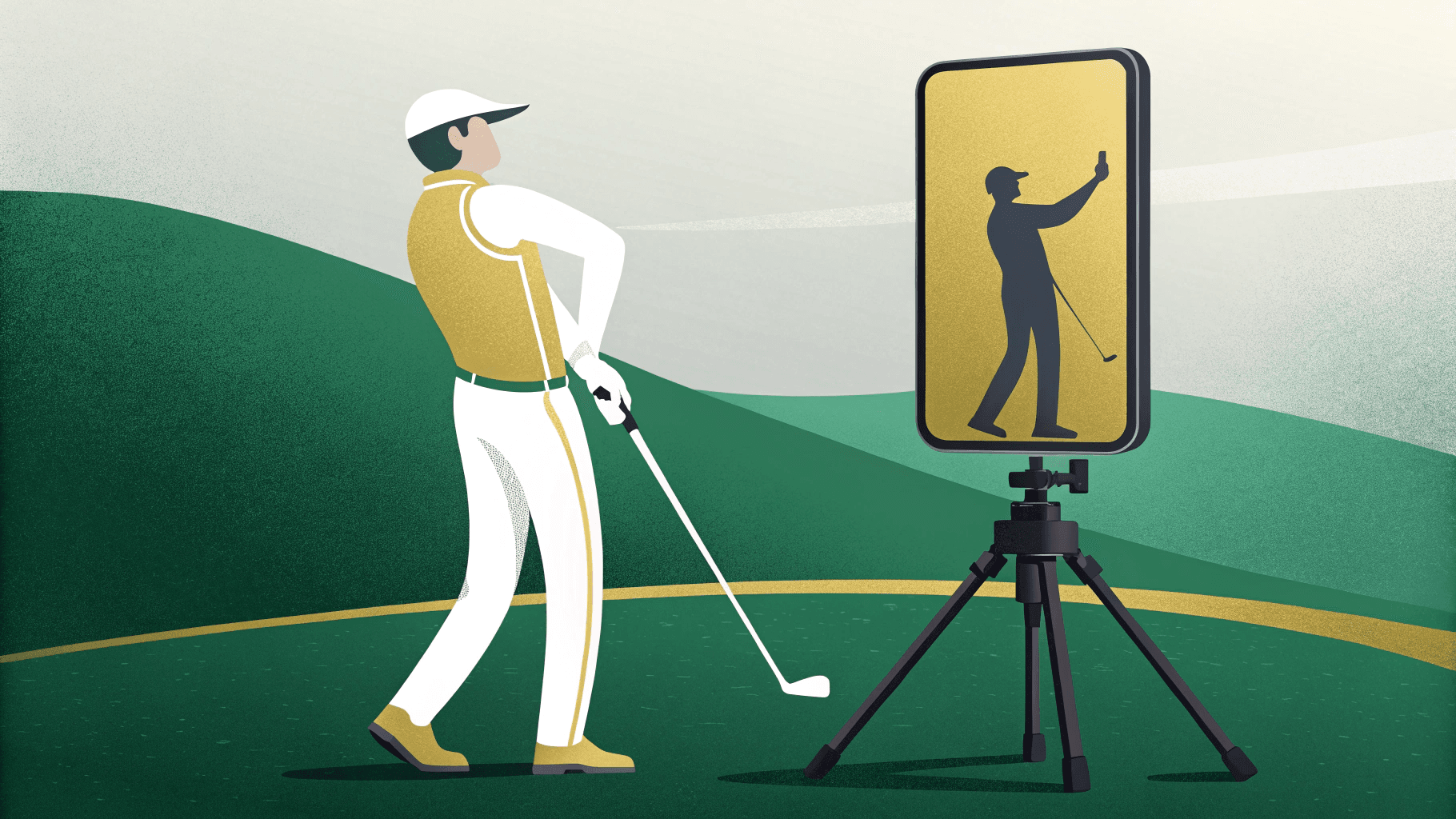
Online golf lessons in 2026 let you submit swing videos for expert annotation or join live video calls for real-time feedback, typically costing £25–80 per session or £15–50 monthly. They're strong for swing analysis, drill prescription, and accountability, but they can't replace hands-on guidance for grip, posture, or putting feel. Your best value comes from a hybrid approach — building fundamentals in person, then shifting to online refinement. Below, you'll find everything you need to make that work.
What Online Golf Lessons Actually Look Like in 2026
You'll encounter three main delivery formats: video submission platforms where you upload swings for asynchronous review; live sessions offering real-time interaction via video calls; and structured programme-based coaching that combines weekly drill plans with regular check-ins. Recognising the advantages and limitations of each format helps you choose the best fit for your goals and budget, making your investment more effective.
Three formats dominate online golf coaching in 2026, and each trades one advantage for a different limitation.
Video submission lets you record swings at your convenience and replay coach annotations indefinitely. The drawback: you might groove a fault for days before correction arrives. Live sessions deliver real-time interaction — instant cueing, immediate adjustments. But rigid scheduling and compressed timeframes can make them feel rushed, particularly when you're working through something nuanced. Asynchronous feedback sits between the two. Your coach responds on their own schedule with structured practice plans you can revisit repeatedly. It's the most flexible online golf format and suits players who want depth over speed.
All three share one blind spot. They capture what the club did, never what you were thinking or feeling when it happened.
What You Can Learn Online vs What Requires In-Person
Remote swing analysis and video analysis work brilliantly for swing mechanics, drill prescription, course management review, programme structure, and accountability. You'll get clear, repeatable frameworks you can practise between sessions.
But some things need your hands-on. Initial grip and posture setup demands a coach who can physically guide you into correct positions. Putting feel, green reading, and bunker technique translate poorly through a screen. And reading your emotional state mid-lesson — the tension you're carrying, the frustration you're masking — requires proximity.
The smartest approach is a hybrid one: build your foundation in person, then maintain and refine it and give you a concrete record of progression over time.
The True Cost of Online Golf Lessons vs In-Person Coaching
The headline rate you see on a platform's pricing page rarely tells the full story. Once you factor in equipment, subscriptions, and the hidden costs that nobody advertises, the gap between online and in-person coaching narrows more than you'd expect. Understanding where your money actually goes — and how a hybrid approach stretches it furthest — matters more than chasing the cheapest per-session fee.
Online lessons also lack the real-time feedback that supports external attention cues, which research shows helps golfers perform more consistently under competitive pressure.
Session Rates, Subscriptions, and Hidden Costs
Single-session online golf lessons typically run $30–100 (£25–80), while subscription models offer ongoing access for $20–65 (£15–50) per month. However, hidden costs such as a tripod or phone mount ($20–40, £15–30), data storage, and platform fees add up. Being aware of these extras helps you budget more accurately and avoid surprises.
In-person coaching carries its own invisible expenses: fuel, parking, range balls at $6–12 (£5–10) per session, and the opportunity cost of time away from work or family. When you calculate the true hourly rate — including travel, preparation, and waiting — in-person sessions often cost double the quoted fee. Online lessons eliminate most of that overhead.
The Hybrid Model That Delivers the Best Long-Term Value
Neither purely online nor exclusively in-person coaching gives you the best return on investment — but combining both does. Start with four to six in-person sessions where your coach can physically adjust your posture, grip, and alignment — tactile corrections that stick faster than any video annotation. Once those fundamentals are grooved, shift to online golf instruction for ongoing refinement at a fraction of the cost.
A practical hybrid looks like this: build your foundation face-to-face, then maintain progress through monthly live remote lessons or asynchronous video reviews. You'll spend less overall while maintaining accountability. Five years ago, this transition felt clunky; today's structured platforms make it effortless. The in-person work gives you something solid to maintain — the online work ensures you actually maintain it.
How to Choose the Right Online Golf Coach
You're paying for expertise you can't physically verify, so your selection criteria need to be sharper than they'd be for a local pro you can watch teach. Four factors separate a coach worth investing in from one who'll waste your time: verified credentials, feedback specificity, technology stack, and pricing transparency.
Equally important is knowing the red flags that signal you should walk away before committing your swing — and your money — to the wrong hands. Beyond swing mechanics, consider whether the coach addresses mental performance coaching, since the psychological side of the game is an entirely separate discipline that technical instruction alone cannot cover.
Credentials, Feedback Style, and Technology Stack
Before you hand over your money, check that your prospective coach holds a recognised certification — PGA, LPGA, or an equivalent national body qualification. Credentials alone won't transform your game, but they confirm your coach understands biomechanics, learning theory, and structured coaching methodology.
Next, evaluate feedback style. "Your backswing is too long" means nothing without the drill to shorten it. Every observation should arrive paired with an actionable step you can practise immediately. If a coach diagnoses without prescribing, move on.
Finally, scrutinise the technology stack. The best online golf lessons use video analysis with slow-motion replay and side-by-side comparison — either against your previous swings or a reference model. This visual layering produces measurably better outcomes than text-only feedback and v over time.
Red Flags That Signal a Bad Online Coach
Knowing what to look for in a good online coach is only half the equation — you also need to spot the warning signs that tell you to walk away. Be wary of any online golf lessons that offer identical programmes to every student regardless of ability, goals, or physical limitations. That's a template, not coaching.
Other red flags include vague feedback without actionable drills, no follow-up between sessions, and claims of instant transformation. If a coach can't explain why a change matters — only telling you "do this" — they likely don't understand the underlying mechanics themselves. A credible coach won't rely on a single diagnostic tool without context or expect you to groove changes endlessly on the driving range without structured checkpoints. Personalisation isn't optional; it's the entire point.
How to Record Your Swing for Online Lesson Feedback
Your coach can only analyse what you show them, so the quality of your swing video matters as much as the swing itself. Getting your camera angles, height, and lighting right takes two minutes but saves you from wasting an entire lesson on unusable footage.
Before you hit record, settle on a single swing thought, because approaching the camera with a cluttered mind produces hesitant, unrepresentative swings that don't reflect your true movement patterns — this is where cognitive load reduction directly shapes the value of your footage.
Camera Angles, Setup, and What Your Coach Needs to See
Proper swing capture requires two non-negotiable angles: face-on and down-the-line. For face-on, position your phone at hand height, roughly eight to ten feet away, centred on your body. The full arc — takeaway through finish — must be visible. For down-the-line, maintain the same height and distance, but place the camera directly behind you, aimed along the target line.
Use your phone's slow-motion mode; it's more than sufficient. Importantly, include clips where the ball flight is visible so your coach can correlate what they see mechanically with what the ball actually does. Without that link, feedback stays theoretical.
Common Recording Mistakes That Waste Your Lesson
Getting those two angles right is half the battle — the other half is avoiding the errors that silently sabotage your footage before your coach ever opens it. The most common mistakes during range sessions:
- Standing too close or too far — your coach loses full-body context or grip detail
- Shooting at ground level distorts proportions and hides the swing plane
- Backlighting — turns you into a silhouette
- Recording only good shots — your misses reveal more than your best strikes ever will
- Capturing a single swing — one rep hides inconsistency patterns
- Compressing video through messaging apps destroys the slow-motion frames every digital coaching platform depends on
Film sequences of five to ten shots, keep the original files, and send your worst alongside your best.
The Real Limitations of Online Golf Lessons
No honest guide glosses over what online coaching still gets wrong. Two structural limitations persist regardless of which platform you choose: the delayed correction problem, where you groove a flaw for days before anyone flags it, and the mental performance gap, where no online lesson tracks what's actually happening between your ears during a round.
Tour professionals dedicate significant training to managing thoughts under pressure, a skill that online platforms rarely address in any structured way. Understanding both limitations will help you build realistic expectations and fill those gaps yourself.
Delayed Correction and the Flaw-Grooving Problem
Because most video-submission platforms operate on a 24–72-hour turnaround, there's a structural gap between what you practise and what your coach actually sees. You submit a swing on Tuesday, hear back on Thursday, and in between, you've spent two sessions grooving the very pattern your coach is about to dismantle. This delayed correction is the fundamental friction point in online golf lessons.
Live sessions solve the timing problem but introduce scheduling constraints and higher costs. The practical middle ground requires discipline: between submissions, only rehearse movements your coach has already approved. Don't experiment with new mechanics unsupervised. Most golfers lack this restraint naturally — the urge to tinker is strong. But treating unreviewed practice as a risk rather than as progress protects you from embedding faults that would take weeks to undo.
The Mental Performance Gap No Online Platform Fills
This is the blind spot in online golf lessons: every platform captures what the club and ball did, but none capture what you were thinking, feeling, or deciding when you did it. Once your basic mechanics are sound, the mental game drives the majority of your performance. A coach can see a pulled iron on video, but can't see that you were anxious, rushed your routine, or abandoned your swing thought under pressure. That invisible data — your decisions under pressure — remains entirely untracked between sessions.
This is exactly the gap that mental performance platforms are built to close. By tracking your emotional state, active swing thought, and pre-shot routine consistency during a round, they give your online coach the missing context they need to coach your mind alongside your mechanics. Without that layer, online instruction improves your swing but leaves the part of your game that matters most on the course completely unaddressed.
How to Get the Most Out of Every Online Lesson
The gap between lessons matters more than the lessons themselves. If you're hitting balls aimlessly between sessions, you're likely grooving the very faults your coach identified — so practise only the specific drill prescribed, with intent. And resist the urge to stack corrections: one swing thought per lesson is enough, because your brain can only process a single motor change at a time before the next sleep cycle consolidates it.
When a bad range session threatens to spiral, apply a bounce back protocol immediately rather than letting compounded frustration carry over into your next rep.
Practising Between Sessions Without Grooving Bad Habits
Between online lessons, unsupervised practice carries a hidden risk: you may groove the very flaw your coach asked you to fix. Without real-time feedback, your golf swing can drift from the correction within minutes — and you won't feel it happening.
The safeguard is discipline. Only practise what your coach has explicitly approved. Record your practice sessions and compare them side by side with the provided reference video. If something feels different from the lesson, stop. Don't experiment. Wait for your next check-in rather than reinforcing a pattern you can't verify. This restraint feels counterintuitive — surely more reps help? They do, but only when the pattern is correct. Unmonitored volume makes bad habits permanent. The lesson either sticks or wastes money, depending entirely on what you do between sessions.
Why One Swing Thought Per Lesson Is Enough
Although your coach may spot five faults in a single swing video, your brain can only hold one or two chunks of information under pressure — and the practice tee is pressure enough when you're rewiring a movement pattern. If your instructor loads three corrections into one lesson, your working memory drops the extras mid-swing.
The most effective online coaches prescribe one swing thought per session, then verify it's consolidated before introducing anything new. This mirrors how motor learning actually works: isolate, repeat, sleep on it, confirm. If you're receiving a laundry list of fixes after every upload, question whose needs that serves. A coach stacking corrections is showcasing expertise, not accelerating your improvement. One lesson, one change, fully owned — that's the sequence that compounds.
Stay with your players between lessons
ClarityCaddie shows you what your players are working on between sessions — who’s engaged, who needs attention, and what cues they’re using on the course. If you coach golfers and want to see how this works in practice, we’ll send you a short walkthrough of ClarityCaddie.
Get Started
Tell us a little about your coaching and we’ll get you set up.
Related reading
Aaron Rai's Final Round at the 2026 PGA Championship
Aaron Rai won the 2026 PGA Championship with two layers of mental architecture working together: Sunday leaderboard discipline and a structural identity built over decades.
Jon Rahm's Strategy for External Noise at the 2026 PGA Championship
Jon Rahm shelved LIV funding news until after his round at the 2026 PGA Championship. The information discipline that protects a Tour pro's competitive state.
Justin Thomas's Reaction to the Pace Warning at the 2026 PGA Championship
Justin Thomas was warned for slow play at the 2026 PGA Championship, then backed off his next shot to reset. The interruption clause inside a tour player's sequence.